
A patent decided by which lawyer got there first
On the morning of February 14, 1876, two attorneys walked into the U.S. Patent Office in Washington, D.C., carrying strikingly similar paperwork. Marcellus Bailey filed a patent application on behalf of Alexander Graham Bell, titled "Improvement in Telegraphy." Later that same morning, William Baldwin filed a caveat, a formal notice that an invention was in progress but not yet ready for a full patent application, on behalf of Elisha Gray, an electrical engineer who ran a manufacturing company in Highland Park, Illinois. Both documents described transmitting the human voice over a wire by varying electrical resistance, and Gray's caveat specifically detailed a receiver using a metal rod dipped into a container of acidulated water, so that sound vibrations would change how deep the rod sat and, with it, the current's resistance.
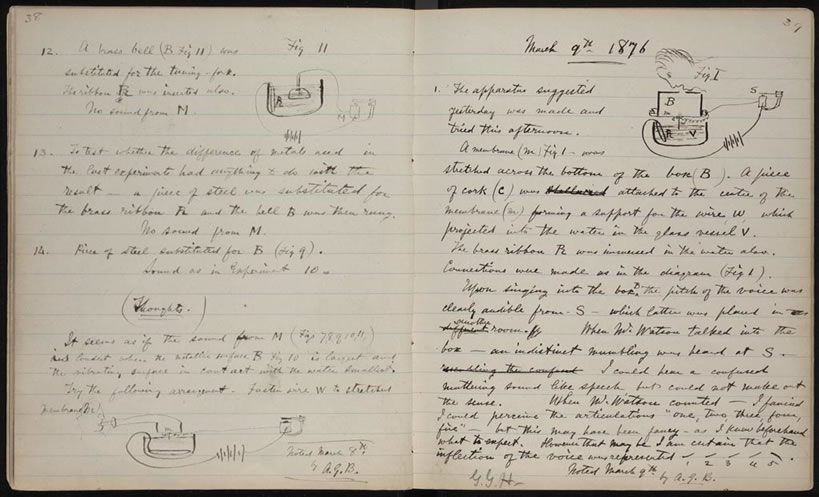
The Patent Office's own docket recorded Bell's application as arriving first, and on March 7, 1876, it issued Bell U.S. Patent No. 174,465, an "apparatus for transmitting vocal or other sounds telegraphically," a patent that would go on to survive more courtroom challenges than any other in American history up to that point, as the six hundred lawsuits further down this page make clear. Three days later, on March 10, Bell tested a transmitter built around the same acidulated-water design Gray had described in his caveat, rather than the design in Bell's own original filing. According to Bell's laboratory notebook entry for that date, he spoke into the apparatus in one room and his assistant, Thomas Watson, heard him clearly through the wire from another: "Mr. Watson, come here, I want to see you."
The examiner who said he sold the case for $100
The similarity between what Bell demonstrated on March 10 and what Gray had described in his caveat some three and a half weeks earlier is the seed of a controversy that outlived both men. A decade after the patent was granted, in 1886, the patent examiner who had processed both filings, Zenas Fisk Wilber, signed a sworn affidavit stating that he had shown Bell's attorney the contents of Gray's confidential caveat before ruling on either application, and that Bell had personally handed him a $100 bill in gratitude. Wilber said he'd been in debt to Bailey, Bell's attorney and Wilber's own companion from Civil War Army service, and that the relationship had clouded his judgment on the case.
Wilber's credibility did not hold up well under scrutiny. He was an admitted alcoholic, gave multiple affidavits over the following years that contradicted each other on specific details, and made the accusation at a moment when Bell's telephone rivals were actively seeking testimony that could unravel his patent. For over a century the episode stayed an open question. Then, in a 2020 paper in IEEE's Proceedings, Marquette University researcher A. J. Burns examined newly compiled correspondence, contemporaneous notes from a Bell associate dated January 25, 1876, and a side-by-side comparison of technical drawings, including one Bell had sketched more than forty days before Gray produced a similarly styled drawing. Burns found no evidence supporting the claim that Bell or his attorneys acted on anything Wilber may have shown them, concluding the two men most likely arrived at closely related designs independently, drawing on the same body of electrical theory circulating at the time.

The word "telephone" predates Bell by fifteen years
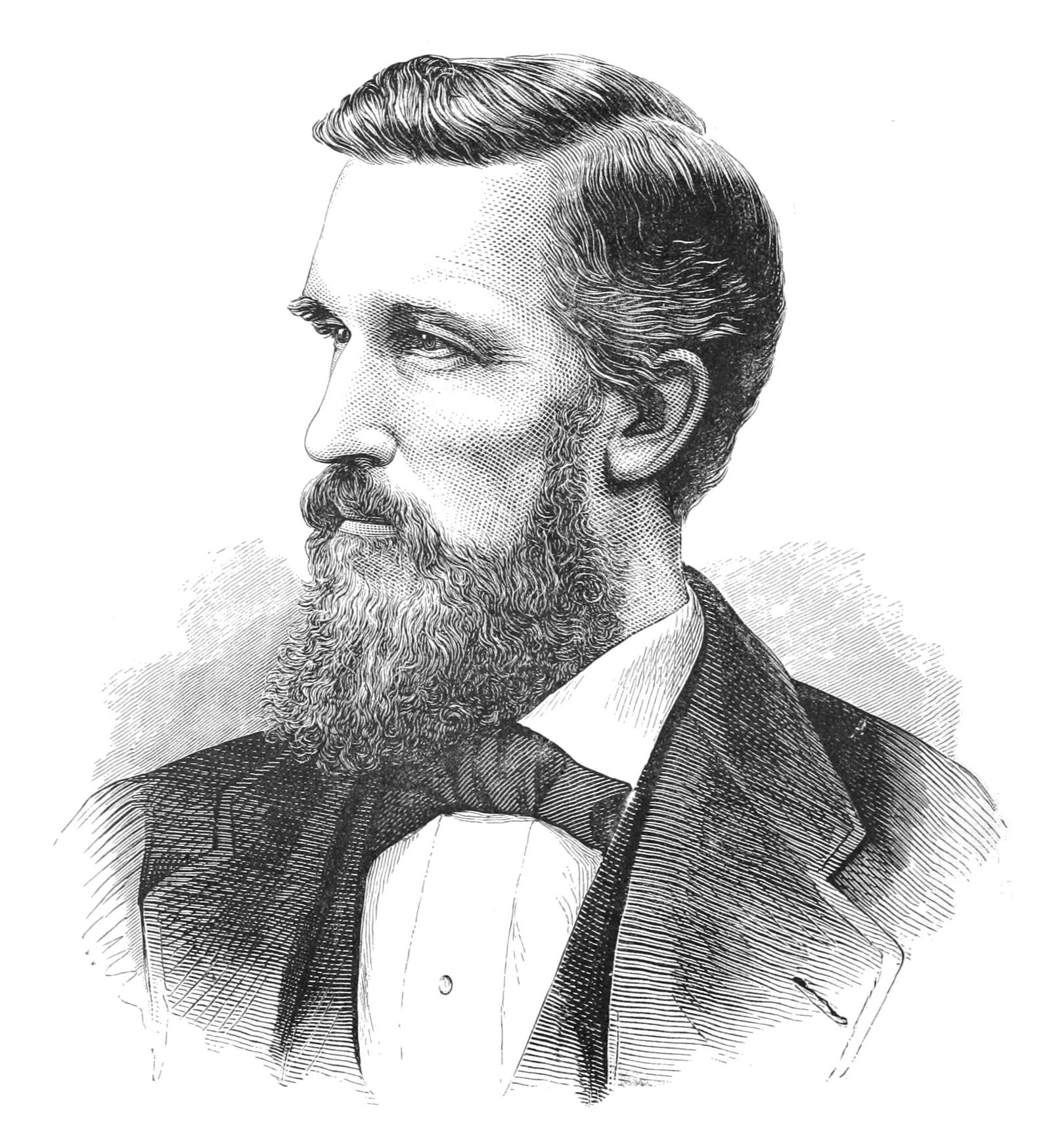
Neither Bell nor Gray was first to move a human voice through a wire, or even first to use the word "telephone." That distinction belongs to Philipp Reis, a self-taught German physicist who built a device he named the Telephon and demonstrated it to the Physical Society of Frankfurt on October 26, 1861, fifteen years before Bell's patent existed. Skeptical colleagues worried Reis might simply have memorized a rehearsed phrase, so a colleague, H. F. Peter, tested him with a deliberately nonsensical sentence composed on the spot: "Das Pferd frisst keinen Gurkensalat" ("The horse does not eat cucumber salad"). The transmission wasn't flawless; Reis reportedly misheard part of what came through. But he recovered enough of the sentence, including the word "Pferd," to convince the room that real, unrehearsed speech had crossed the wire. Reis died of tuberculosis in 1874, two years before Bell's patent existed, at forty years old.
Reis's device never became the telephone people settled on, and the reason is mechanical rather than a matter of priority. His transmitter relied on a make-and-break contact that interrupted the circuit with each sound vibration, rather than varying the circuit's resistance continuously the way Bell's and Gray's designs did. That made it reliable for reproducing musical tones but prone to garbling connected speech more often than transmitting it cleanly. When Bell's patent later went to court, opponents pointed to Reis's earlier device as evidence the idea already existed; American courts ruled that consistently reproducing intelligible speech, which Reis's design could not do, was the meaningful threshold Bell's patent had cleared and Reis's had not.
The inventor who couldn't afford ten dollars
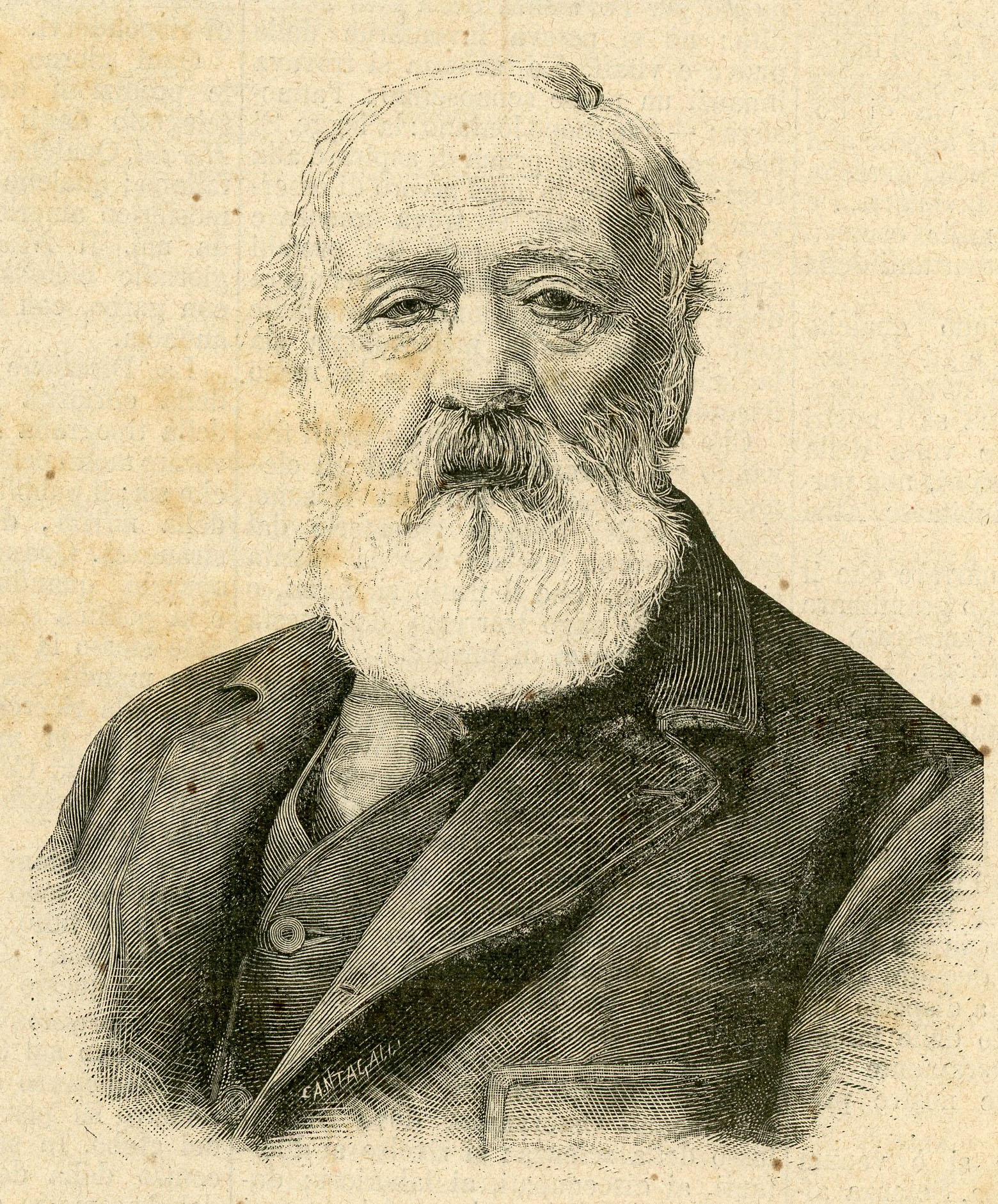
A third claim comes from Antonio Meucci, an Italian-American inventor who had been developing a voice-transmitting device he called the teletrofono since the 1850s, reportedly built in part so he could communicate between his workshop and an upstairs room where his wife, in poor health, spent much of her time. In 1871, Meucci filed a patent caveat describing the device, the same kind of preliminary notice Gray would file five years later, and paid the ten-dollar renewal fee again in 1872 and 1873. On December 28, 1874, more than a year before Bell's application existed, the caveat expired because Meucci didn't renew it. The usual version of the story stops there: he was too poor to find ten more dollars. But records show he wasn't broke in any general sense during those same years. He paid for several full patents on unrelated inventions, at $35 apiece, in 1872, 1873, 1875, and 1876, plus another $10 caveat, none of it for anything telephone-related. Whether he simply stopped prioritizing the telephone project or genuinely couldn't scrape together that specific ten dollars in December 1874 isn't settled. Bell's biographer Robert V. Bruce went further still, arguing the 1871 caveat never actually described an electric telephone at all, just an acoustic tube-and-diaphragm setup, a reading other Meucci researchers reject.
The claim stayed a historical footnote until 2002, when the U.S. House of Representatives passed House Resolution 269 by voice vote, a nonbinding measure "expressing the sense of the House of Representatives" that honored Meucci's life and work, including the line that "if Meucci had been able to pay the $10 fee to maintain the caveat after 1874, no patent could have been issued to Bell." That's a narrower claim than the version that often circulates in Italian and Italian-American press, which sometimes describes the resolution as Congress officially declaring Meucci the true inventor of the telephone. The resolution did neither: it didn't revoke Bell's patent, rule on inventorship, or carry any legal force at all. It was, and remains, an expression of honor for a claim, not a verdict on one. MythCairn keeps a running tally of claims like this one, where the version that circulates publicly claims more than the documented record actually backs up.

Six hundred lawsuits and one vote that finished it
None of these rival claims ever displaced Bell's patent in court, but they didn't go untested, either. Bell Telephone and its successors spent the patent's roughly seventeen-year term defending it against more than 600 lawsuits, the largest volume of litigation any single U.S. patent had generated up to that point. The most consequential fight was with Western Union, which had hired both Gray and Thomas Edison to build a competing telephone system using Edison's improved carbon transmitter. Bell Telephone sued for infringement and won; the companies settled on November 10, 1879, with Western Union exiting the telephone business entirely, handing over its patents, equipment, and subscriber network in exchange for 20 percent of Bell's rental revenue for the remainder of the patent term.
The final word came from the U.S. Supreme Court. A consolidated set of challenges, including Dolbear v. American Bell Telephone Co., reached the Court as The Telephone Cases, 126 U.S. 1, and were decided on March 19, 1888, with the justices voting 4 to 3 to uphold Bell's patent; two justices took no part in the decision. The closest call in that vote had nothing to do with Gray, Reis, or Meucci. It came from a fourth claimant this page hasn't mentioned yet: Daniel Drawbaugh, a self-taught mechanic from rural Pennsylvania who said he'd built a working telephone as early as 1867 and produced roughly forty witnesses who recalled seeing or hearing it. Chief Justice Morrison Waite wrote the majority opinion rejecting that evidence as unproven; Justice Joseph Bradley's dissent, joined by two other justices, argued Drawbaugh had been disbelieved mainly because he was an obscure tinkerer up against an already-famous scientist, not because his evidence was actually weaker. It was as close as the country's highest court ever came to leaving room for doubt, and it settled the matter legally even as the historical argument kept going for more than a century afterward.
The name that eventually stuck to the invention is Bell's, and by the modern reassessment of the patent-office evidence, probably deserves to be. But "who invented the telephone" was never a question with one honest, single-word answer: a rival engineer filed a nearly identical caveat the same morning, a German physicist had already proven speech could cross a wire fifteen years earlier, an Italian immigrant's version lapsed for the price of a caveat renewal, and the eventual winner still had to survive six hundred lawsuits and a Supreme Court vote to keep the name attached. It's close to the same pattern that turns up almost every time the record gets checked closely, the same way no single person actually invented electricity, and the same way George Washington Carver spent his career denying credit for inventing peanut butter, a myth that outlived his own objections to it. The ancient Greeks, notably, had already imagined this problem solved: they gave Hermes, their messenger god, sole and uncontested credit for carrying words across any distance instantly, a monopoly no mortal inventor has ever quite managed to hold onto for long.