
Why this index exists
MythCairn's Invented History section keeps running into the same shape of story: something everyone assumes has always been done a certain way, and a paper trail showing the practice or belief is much younger than assumed. Our own George Washington Carver piece found that peanut butter predates him by centuries. Our electricity piece found no single inventor at all. This page collects that pattern across subjects beyond what any single article covers: costume history, wedding customs, national holidays, and a few historical figures whose popular image turns out to be a much later invention. Our Inca deities piece found the same shape in a sun festival rebuilt in 1944. A similar contest over credit shows up outside this table too: ask who actually invented the telephone and the record splits into competing patent claims that took a Supreme Court vote to settle, a dispute this index's table format doesn't have room to score the way it scores a simple year.
Every row below links to a documented earliest appearance, not to another myth-busting listicle repeating an unsourced date. Where a precise year isn't available in the record, the table says so instead of inventing one. Three of the sixteen rows here fall into that category, and we'd rather show an honest 19th century than a fake 1823.
The verdicts
| Claim | Verdict | First appeared | Real origin | Source |
|---|---|---|---|---|
| Vikings wore horned helmets into battle | False | 1820 to 1876 | No excavated Viking-age helmet has horns; opera costume design fixed the image in the public mind. | Discover Magazine |
| Every Scottish clan has always had its own tartan | False | 1842 | Presented as a 15th-century manuscript, later exposed as a forgery; its authors designed many of the “clan” patterns themselves. | Wikipedia: Vestiarium Scoticum |
| White wedding dresses symbolize the bride’s purity | Partly true | 1840 | Victoria chose white mainly to showcase British lace; the purity meaning attached to the color afterward. | Smithsonian Magazine |
| A diamond ring is a timeless engagement custom | False | 1947 to 1948 | Written as ad copy for De Beers; rings before this commonly used other stones, or none at all. | The Drum |
| Green has always been Ireland’s color | False | 1798 | St. Patrick’s official color was light blue; green became dominant only after the 1798 nationalist rebellion. | Smithsonian Magazine |
| Singing Auld Lang Syne at midnight is an age-old custom | Partly true | 1929 | The poem dates to 1788, but the annual New Year’s Eve broadcast ritual began with Guy Lombardo’s band. | The Canadian Encyclopedia |
| Medieval people believed the Earth was flat | False | 1828 | Invented for a fictionalized Columbus biography; educated medieval scholars took a spherical Earth for granted. | History.com |
| Young George Washington confessed to chopping down a cherry tree | False | 1806 | Added six years after the biography’s first edition; no source from Washington’s lifetime mentions it. | George Washington's Mount Vernon |
| Medieval women were locked into iron chastity belts | False | 19th century | Began as Renaissance satire; no medieval law, medical text, or dig has ever turned one up, and most “antiques” were Victorian-made. | Smithsonian Magazine |
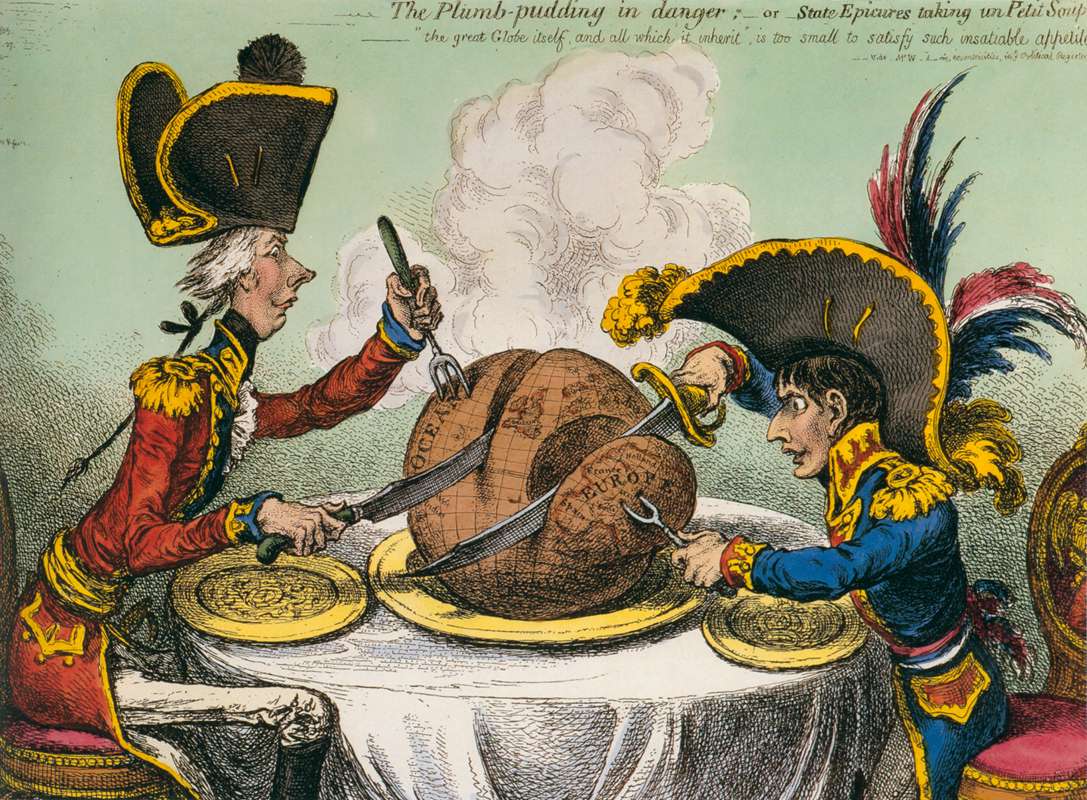
| Napoleon Bonaparte was unusually short | False | c. 1805 | He stood about average height for a Frenchman of his era; the myth came from a measurement mix-up and British caricature. | History.com |
| Americans have kept one continuous Thanksgiving since 1621 | False | 1863 | Lincoln fixed it as an annual national holiday after a 36-year campaign by editor Sarah Josepha Hale; states varied before that. | History.com |
| Rudolph has always been one of Santa’s traditional reindeer | False | 1939 | Santa’s eight reindeer were named in an 1823 poem; Rudolph is a 20th-century department-store marketing character. | Smithsonian Institution |
| Groundhog Day forecasts are an ancient tradition | Partly true | 1887 | Descends from older German Candlemas weather lore, but the Punxsutawney ritual itself was a newspaper editor’s invention. | History.com |
| Coca-Cola invented Santa Claus’s red suit | False | Uncertain | Illustrator Thomas Nast drew a red, fur-trimmed Santa in 1881, fifty years before Coca-Cola’s first Santa ad. | Snopes |
| The Great Wall of China is visible from space with the naked eye | False | 1754 / 1932 | Astronauts report it’s difficult or impossible to see without magnification; far narrower than structures that actually are visible. | Snopes |
| George Washington Carver invented peanut butter | False | c. 1921 | Patented in 1884 by Marcellus Gilmore Edson, when Carver was still years from his agricultural career. | MythCairn: George Washington Carver |
Cite this
MythCairn Editorial, “The Invented Traditions Index: How Old Is ‘Ancient,’ Really?” MythCairn, published August 9, 2026, https://mythcairn.com/invented-traditions-index/.
How a claim earns a row here
A row needs a documented earliest appearance: a named book, illustration, advertisement, proclamation, or broadcast with a year attached, sourced to a museum, an encyclopedia, a major news outlet's history desk, or a primary document. General retellings don't count unless they cite one of those.
“False” means the custom or story is not what the record shows happened when it's claimed to have happened. “Partly true” means part of the claim holds up (a song, a folk custom, a real event) but the specific form or timing people assume is centuries older than what the record supports. Where a single year isn't recoverable, the table gives the narrowest honest range instead of guessing.
This table will grow the same way FactCrumbs' animal myths index has: new MythCairn Invented History articles add a row each, and any claim we can't pin to a document gets left out rather than padded in.