Protection before biography
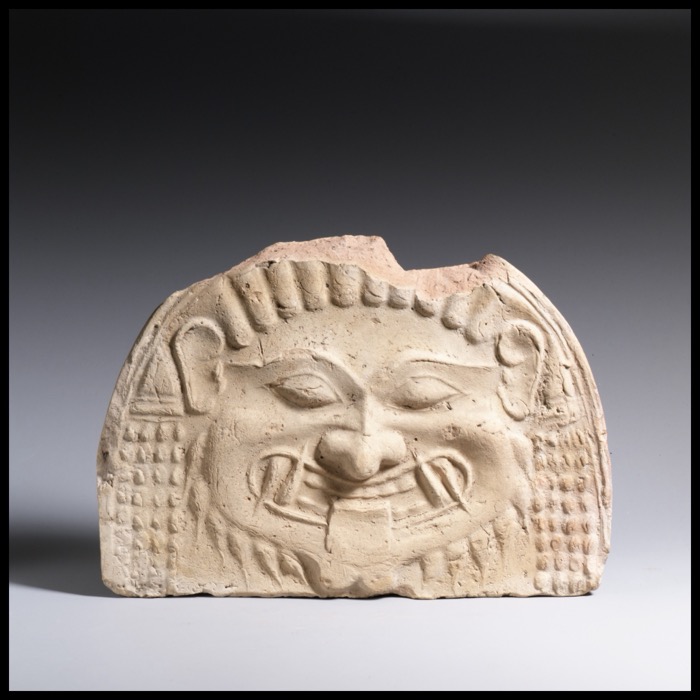
Apotropaic images aim at viewers who might harm the wearer or building. The gorgoneion's wide eyes and bared teeth perform that job without narrating Perseus or Athena.
Only later do poets attach a woman named Medusa to the face, in Hesiod as a born monster and in Ovid as a punished mortal.
Objects that show the ward working
Terracotta roof antefixes from the sixth century BCE mount the face where it can stare outward from a temple. A gold pendant in the Metropolitan Museum, dated around 450 BCE, shrinks the same face for personal wear.
Those objects match Homer's battlefield use: Terror and Rout accompany the gorgoneion on Agamemnon's shield.
How this differs from modern "Medusa as survivor"
Contemporary art such as Luciano Garbati's reversed statue uses Ovid's assault narrative for present-day politics. That reading is real but it is not the Archaic protective logic.
For the full symbol history including Versace and Garbati, see why ancient Greeks carried the Medusa symbol. Greek harvest symbolism with borrowed attributes parallels Demeter's cornucopia.