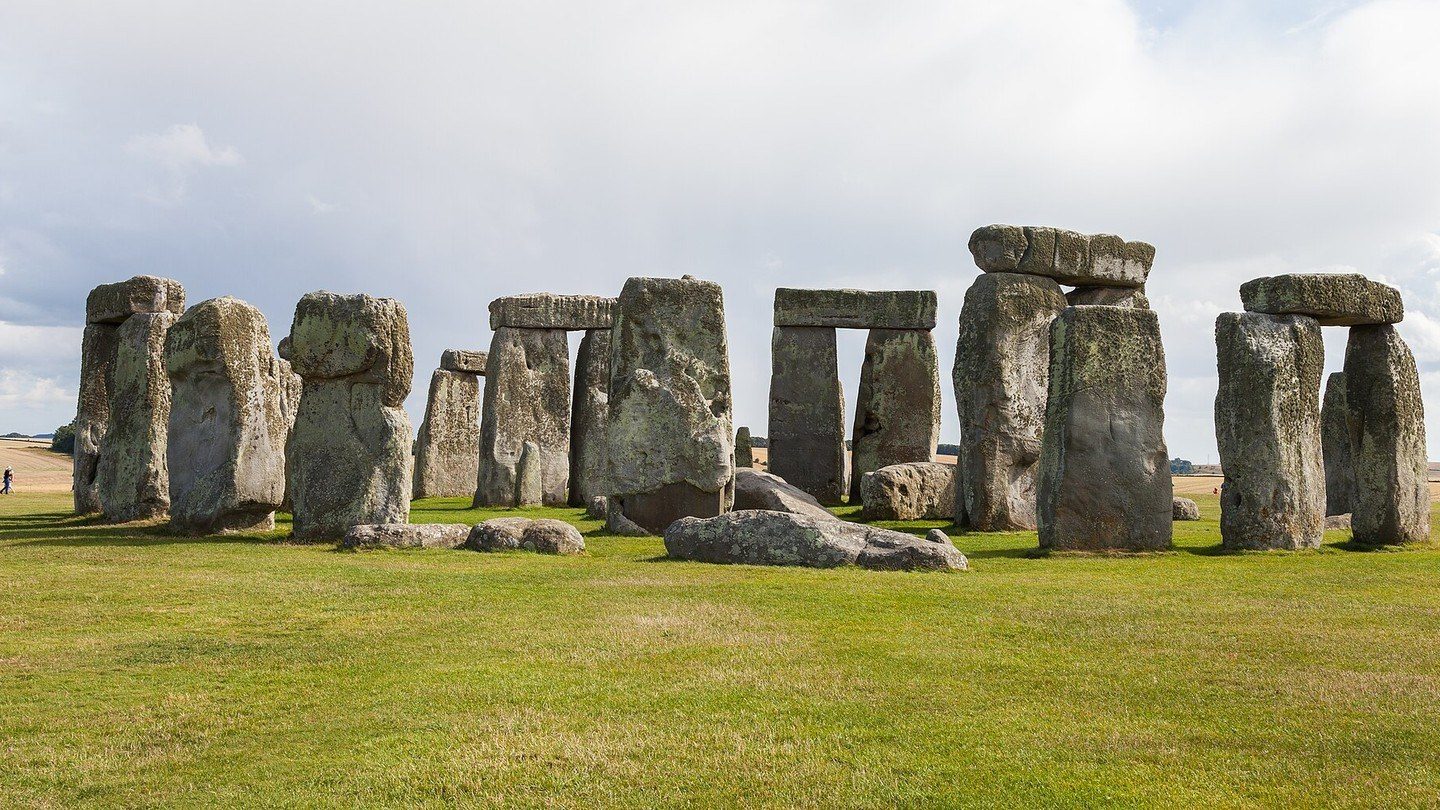

The short answer: it depends which Stonehenge you mean
Almost every answer to this question picks one monument and one date, and that is where the trouble starts. Stonehenge was not built in a single campaign. English Heritage, which manages the site, puts it this way: "Work began on Stonehenge about 5,000 years ago, but it was built in stages over many years." The first version was an early henge monument; the stone circle was put up in the late Neolithic period, about 2500 BC.
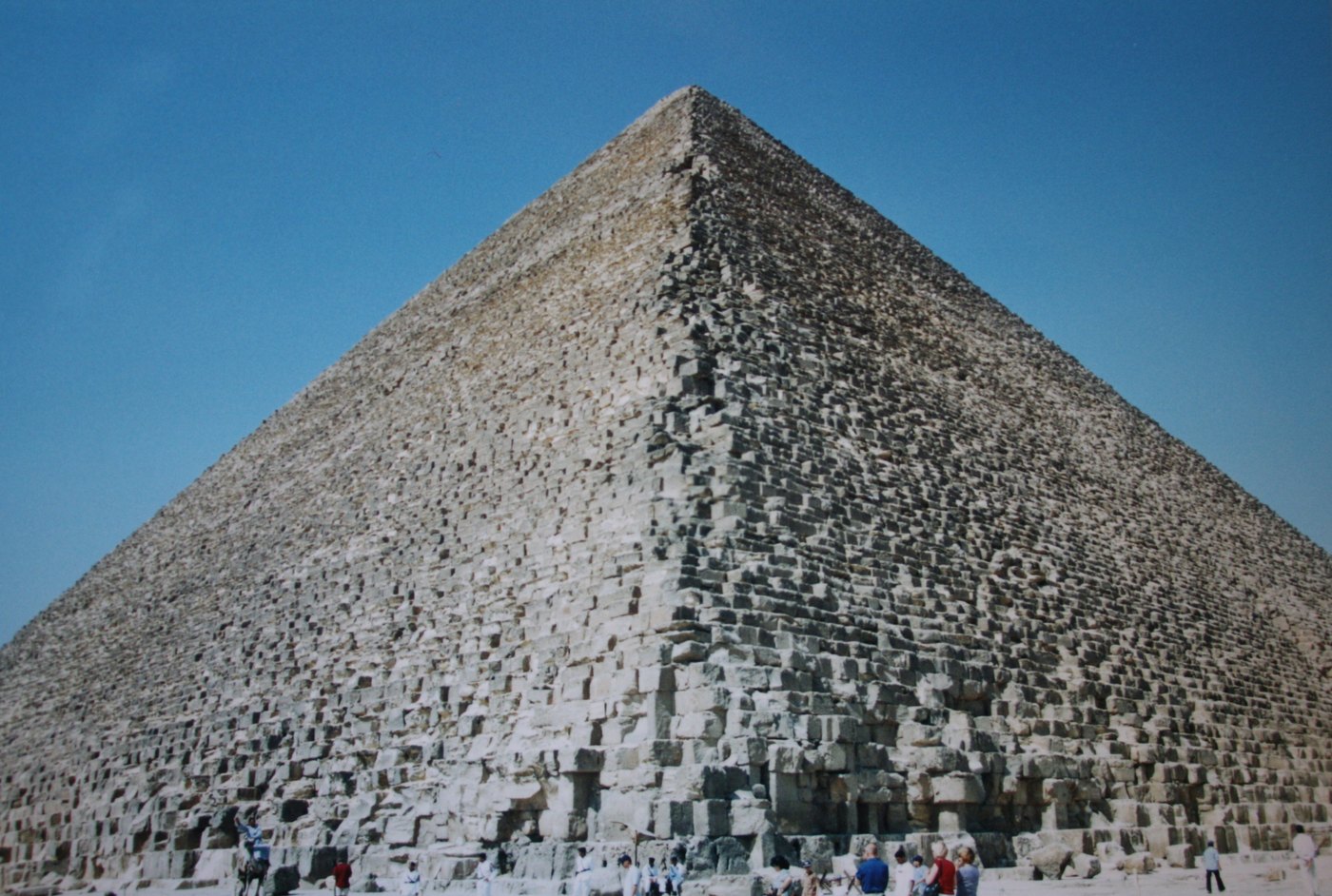
The Great Pyramid of Giza is dated to about 2600 BC, built as the tomb of the pharaoh Khufu. Set the two beside each other and the question splits in half. Stonehenge's first phase, the circular ditch and bank, is older than the Great Pyramid by roughly four centuries. The sarsen circle, the one on the postcards, is younger than it.
So the answer is yes for the earthwork and no for the stone circle. Neither half is a technicality. They are the same monument at two points in a construction history that ran for well over a thousand years.
Why Stonehenge cannot be given one date
English Heritage dates the earliest known major event at the site to about 3000 BC, calling it "the construction of a circular ditch with an inner and outer bank, built about 3000 BC". It enclosed an area about 100 metres across and had two entrances. This earthwork is the henge in the name. Just inside the bank were 56 pits known as the Aubrey Holes, and in and around them people buried cremations. About 64 have been found, and English Heritage estimates that as many as 150 people were originally buried at Stonehenge, which would make it the largest late Neolithic cemetery in the British Isles.
The stones came much later. English Heritage puts the setting up of the stones in the centre of the monument at about 2500 BC, and describes two kinds of rock in use: large sarsens arranged as an inner horseshoe within an outer circle, and smaller bluestones set between them in a double arc. The bluestones had traveled. They came from the Preseli Hills in south-west Wales, more than 150 miles (250 km) away.
Roughly 200 or 300 years after the stones went up, the central bluestones were rearranged into a circle and an inner oval, later altered again into a horseshoe, and the Avenue linking the monument to the river Avon was built.
Building continued after that. The last prehistoric work English Heritage records is the digging of two rings of concentric pits, the Y and Z holes. Antler fragments found inside them gave radiocarbon dates between 1800 and 1500 BC.
Other accounts run a little earlier. Wikipedia's Stonehenge article, checked 12 October 2026, dates the surrounding bank and ditch to about 3100 BC and places the sarsen circle between 2600 and 2400 BC, where English Heritage gives about 3000 BC for the earthwork and about 2500 BC for the circle. The two describe the same sequence with different margins of error, and neither disturbs the comparison.
| Phase | What was built | Date given |
|---|---|---|
| First monument | A circular ditch with an inner and outer bank, about 100 m across, with two entrances; 56 pits known as the Aubrey Holes just inside the bank | About 3000 BC (English Heritage); about 3100 BC (Wikipedia) |
| Stone settings | Large sarsens set as an inner horseshoe inside an outer circle, with smaller bluestones between them in a double arc | About 2500 BC (English Heritage); 2600 to 2400 BC (Wikipedia) |
| Rearrangement | The central bluestones reset as a circle and an inner oval, later altered into a horseshoe; the Avenue to the river Avon built | 200 to 300 years after the stone settings (English Heritage) |
| Last prehistoric work | Two rings of concentric pits, the Y and Z holes | Radiocarbon dated to between 1800 and 1500 BC (English Heritage) |
When the Great Pyramid was built
The Great Pyramid was built for Khufu, second king of Egypt's Fourth Dynasty. Wikipedia's Great Pyramid article, checked 12 October 2026, dates the construction to about 2600 BC and gives the building period as about 26 years, while noting that most recent chronological estimates place Khufu and his pyramid between 2700 and 2500 BC. Mortar taken from between the core blocks and radiocarbon dated in the 1980s and 1990s calibrated to 2871 to 2604 BC, and a reanalysis based on the younger samples gave a completion date between 2620 and 2484 BC. History.com gives Khufu a reign of 2589 to 2566 BC. On the conventional figures the work sits in the first half of the 26th century BC. Around 2.3 million blocks of stone went into it, and it is the oldest of the Seven Wonders of the Ancient World and the only one still largely standing.
The phrase "the pyramids" is broader than the question suggests. If it means the Giza group, the span runs across three reigns: Khufu (2589 to 2566 BC), his son Khafre (2558 to 2532 BC), and Khafre's son Menkaure (2532 to 2503 BC), the dates again from History.com. If it means Egyptian pyramids as a class, the series begins earlier, at Saqqara.
Djoser's Step Pyramid there was the first Egyptian pyramid. Published estimates for Djoser's reign run from the 2680s BC to the 2610s BC. Set against Stonehenge it falls between the monument's two main phases: later than the ditch and bank, earlier than the sarsen setting.

The two monuments on one line
Put the dates in order and the trick behind the question becomes visible.
| Structure or phase | Date | Date from |
|---|---|---|
| Brú na Bóinne passage tombs, including Newgrange | About 3200 BC | Heritage Ireland |
| Stonehenge, first monument: the ditch and bank | About 3000 BC | English Heritage |
| Step Pyramid of Djoser, Saqqara (first Egyptian pyramid) | Reign of Djoser; published estimates run from the 2680s to the 2610s BC | Wikipedia, Djoser |
| Great Pyramid of Giza, tomb of Khufu | About 2600 BC | Wikipedia |
| Stonehenge, sarsen circle | About 2500 BC | English Heritage |
| Stonehenge, sarsen circle, alternative range | 2600 to 2400 BC | Wikipedia |
| Stonehenge, Y and Z holes | 1800 to 1500 BC | English Heritage |
Read down that column and the single word Stonehenge covers about 1,500 years, from the first ditch to the last pits. The Great Pyramid of Giza was one project that took about 26 years. Comparing the two is comparing a span with a point, and which one comes first depends on where along the span you put the point. The margins matter here too. The gap between the first ditch and the pyramid is wide enough to survive either source's error bars; the gap between the sarsen circle and the pyramid is not, which is why the second comparison is the one people argue about.
Why the claim survives anyway
The picture in most people's heads is the sarsen circle with its lintels, and that is a later addition to the monument, not the original structure. If the stone circle is what you have in mind, the Great Pyramid is the older building.
The claim that Stonehenge is older than the pyramids is not wrong on its own terms. It is a statement about the first Stonehenge set against the Giza pyramids, and read that way it holds. It stops holding the moment the stone circle is what you mean.
The pattern of an assumed age turning out to be narrower than expected shows up well beyond monuments as well. The invented traditions index checks popular claims about how old customs and stories are against the earliest document that supports each one. The Pantheon shows the drift running the other way: its front carries a date about 150 years older than the building it is cut into, because the emperor who rebuilt it put the earlier builder's inscription back up. The Hanging Gardens of Babylon are a case in point: even their location is disputed, so a date for them is harder to pin down than a date for a ditch.
Older than both
The comparison is usually a way of saying that Stonehenge is very old. It is, but it is not the oldest monument in its own part of Europe. At Brú na Bóinne in County Meath, the passage tombs of Newgrange, Knowth and Dowth were built in about 3200 BC, according to Heritage Ireland's visitor information for the complex. That is older than the first Stonehenge by two centuries or so.
Nor is it the oldest large circular enclosure in Europe. In 2022 archaeologists working at Vinoř, on the outskirts of Prague, uncovered a roundel, a circular structure roughly 180 feet across, dated to between 4900 and 4600 BC. Around 200 roundels have been found across Europe, and 35 of them in the Czech Republic.
Reports of the roundel described it as older than Stonehenge and the pyramids alike, and against those dates it is older than either. The pattern repeats with every such comparison. The answer depends on which part of Stonehenge is doing the work.