
Eve is in Genesis. Lilith is a word in Isaiah.
The difference between Eve and Lilith starts with where each one is written down. Eve is a named woman in Genesis. Lilith, understood as Adam’s first wife, is not in Genesis at all. The Hebrew Bible contains the word lilit once, in Isaiah 34:14, and the verse says nothing about Adam. The Jewish Women’s Archive states that the Bible mentions the Lilith only once, as a dweller in waste places.
Genesis makes the woman in a single sentence, in the King James wording: “the rib, which the LORD God had taken from man, made he a woman.” She gets her name a chapter later: “Adam called his wife’s name Eve; because she was the mother of all living” (Genesis 2:22 and 3:20).
Everything that links the two women comes later. According to the Jewish Women’s Archive, the Alphabet of Ben Sira is where Lilith is first known as an individual with a history, and the Archive dates it to the eighth century CE and Wikipedia places between 700 and 1000 (checked 17 October 2026). Genesis is read as scripture by Jews and Christians, and this page treats the Lilith material as the history of a story, not as a verdict on anyone’s faith.
Eve and Lilith side by side
Each cell below rests on the sources listed at the bottom of the page. Where those sources disagree, the later sections say so.
| Eve | Lilith | |
|---|---|---|
| Where she is written down | Genesis creation story: the woman is made in 2:22 and named in 3:20. | One Hebrew word, lilit, in Isaiah 34:14. As a named person she first turns up centuries later in a medieval story. |
| Kind of text | Narrative in the Hebrew Bible | Prophecy (Isaiah), a Qumran exorcism liturgy, magic bowls, Talmud, a medieval Hebrew story collection, Kabbalah |
| How she is made | From Adam’s rib (Genesis 2:22) | No creation story survives in the earliest sources, which treat liliths as a class of demon. In the Alphabet of Ben Sira she is shaped from earth, like Adam, after Adam is alone. |
| Her name | Adam gives it: Eve, “the mother of all living” (Genesis 3:20) | A word for a kind of night being before it is a personal name |
| What she does | Adam’s wife and the mother of the living | Threatens sleepers and newborns in the older sources; in the Alphabet quarrels with Adam, leaves him, and is pursued by three angels; in the Zohar partners Samael |
| Where the sources stand today | Part of the canonical text of Judaism and Christianity | A figure of folklore, demonology and mysticism that Jewish feminists reclaimed from the 1970s |
Lilith’s sources in date order
The comparison pages read for this article mostly list traits. The dates change the picture, because the trait that makes Lilith famous (the quarrel with Adam) is one of the youngest items on the list.
| Date | Source | What it says about Lilith | Kind of evidence |
|---|---|---|---|
| about 125 to 100 BCE (by scribal hand) | Great Isaiah Scroll, Qumran | Isaiah 34:14 has the word in the plural, liliyyot, in a list of creatures of a ruined landscape | Biblical manuscript |
| late 1st century BCE | Songs of the Sage (4Q510), Qumran | A speaker proclaims God’s splendor to frighten the spirits of destroying angels, demons, Lilith and howlers | Dead Sea Scroll, exorcism liturgy |
| about 400 to 800 CE (the Jewish Women’s Archive range) | Aramaic incantation bowls, Iraq and Iran | Bowls name “male and female liliths” as demons that haunt sleepers and attack children | Inscribed earthenware bowls |
| about 500 CE (conventional date of the Gemara) | Babylonian Talmud, Shabbat 151b and Niddah 24b | A lilith seizes a man who sleeps alone; a miscarried fetus that looks like a lilith, wings included, still counts as a child | Rabbinic discussion |
| 700 to 1000 CE | Alphabet of Ben Sira | Lilith is the woman God makes for Adam from earth; she refuses to lie beneath him, says the Name and flies off | Medieval Hebrew and Aramaic story collection |
| 13th century | Treatise on the Left Emanation; the Zohar | Lilith becomes Samael’s partner on the “Other Side” | Kabbalistic text |
| 1514 | Salonica printing of the Alphabet | First on Wikipedia’s list of printed editions of the Alphabet (checked 17 October 2026); two copies are known to survive | Printed book |
| 17th century | Johannes Buxtorf, Lexicon Talmudicum | Wikipedia (checked 17 October 2026) credits this lexicon with making “Adam’s first wife” widely known | Scholarly dictionary |
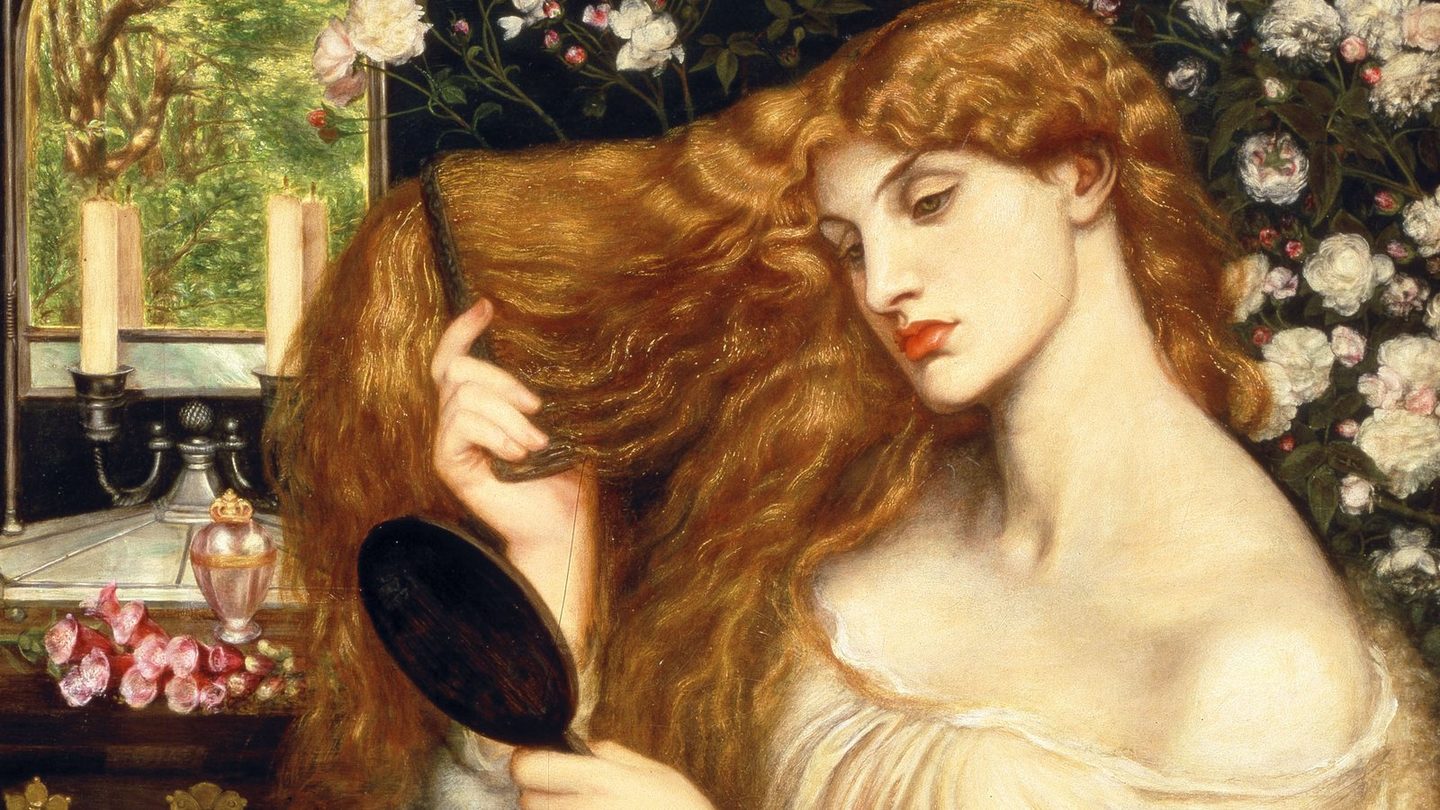
| 1866 to 1868, repainted 1872 to 1873 | Dante Gabriel Rossetti, Lady Lilith | A painting of a woman combing her hair, with a sonnet on the frame about the beauty of the body | Painting |
| 1972 and 1976 | Ms. magazine; Lilith magazine | Lilly Rivlin’s 1972 article and the magazine founded in autumn 1976 present Lilith as a woman who claimed equality | Magazine articles |
The oldest Lilith sources, from Qumran to the Talmud, treat her as a kind of demon, and the Jewish Women’s Archive traces the category much further back into Babylonian religion, where lilû and lilitu demons were believed to be the spirits of people who died young. Wikipedia also records that some rabbinic authorities, Maimonides and Menachem Meiri among them, rejected the existence of Lilith altogether (checked 17 October 2026).
Isaiah 34:14: one word, many readings
Anyone who opens a Bible to look for Lilith meets a translation problem first. The verse sits in a prophecy about a ruined land where wild animals gather, and the Hebrew word is unclear enough that translators have guessed for centuries. The early Latin Bible, the Vulgate, used lamia, and the Greek Septuagint used onokentauros, both according to Wikipedia’s article on Lilith (checked 17 October 2026). English versions then wander.
| Year | Translation | How it renders the word in Isaiah 34:14 |
|---|---|---|
| 1395 | Wycliffe | Lamya |
| 1582/1610 | Douay-Rheims | lamia |
| 1587 | Geneva Bible | screech owl |
| 1611 | King James Version | screech owl |
| 1901 | American Standard Version | night monster |
| 1947 | Revised Standard Version | night hag |
| 1966 | Jerusalem Bible | Lilith |
| 1970 | New American Bible | the lilith |
| 1978 | New International Version | night creature |
| 1989 | New Revised Standard Version | Lilith |
| 2001 | English Standard Version | night bird |
The King James Version has a second oddity in the same verse, which reads “the satyr shall cry to his fellow.” What that word covers in Greek and Roman sources is a separate story, told in Faun vs. Satyr.
Where the sources disagree
Was she made at the same time as Adam, or after him? The summary most readers meet says Lilith was made at the same time as Adam from the same clay. Wikipedia’s History section says it (checked 17 October 2026), and Google’s AI overview (snapshot of 16 October 2026) repeats it. The Jewish Women’s Archive describes the Alphabet differently: God created Lilith from the earth after the creation of Adam. The text as Wikipedia quotes it (checked 17 October 2026) agrees. God sees that Adam is alone, says it is not good for man to be alone, and then makes a woman from the earth, as Adam himself was made.
So the shared part is the material, and her claim to equality rests on it. The order is not shared, because she is the second creature made. “Same time” probably comes from reading Genesis 1:27, “male and female created he them,” as her entrance. The Alphabet itself places her after Genesis 2:18.
Which text mentions her first? Three answers are in circulation, and each is right for a different question. If the question is where the Hebrew word first appears, it is Isaiah 34:14, and a Qumran copy of that verse dates to about 125 to 100 BCE. If the question is the oldest clear reference to a supernatural Lilith, Wikipedia names the Dead Sea Scroll 4Q510 (checked 17 October 2026), dated on handwriting to the late first century BCE. If the question is the first account of a Lilith as an individual with a life story, the Jewish Women’s Archive says that is the Alphabet of Ben Sira. A page that gives one date for “the first mention” has picked one of those questions without saying so.
Does the Bible name her? One Christian Q&A page says that, apart from the NRSV, every major translation reads “night creature” or “screech owl.” The table above does not support that: the Jerusalem Bible (1966) and the New American Bible (1970) also use the name. The same page argues that Genesis 2 is a closer look at the creation already described in Genesis 1, so no second woman is hinted at. Readers who take Genesis 1:27 as a separate event reach the opposite view. The verse does not name a second woman, and according to Wikipedia (checked 17 October 2026) the Alphabet is the earliest surviving source of the Lilith-as-first-wife story.
The Alphabet’s date is also unsettled, which is why two reputable sources give “eighth century” and “700 to 1000.” Summaries of the story also differ in the detail of how long Lilith may harm a newborn girl: twelve days in the Jewish Women’s Archive summary, twenty days in the translation Wikipedia quotes (checked 17 October 2026). Neither source gives the Hebrew, so this page does not pick one. For the order of creation, the text’s own sequence is the safer thing to cite than the compressed summary.
How the two women ended up as a pair
The pairing was built by successive readers. The Alphabet of Ben Sira supplies the quarrel and the flight. The Treatise on the Left Emanation and the Zohar, in the thirteenth century, move her from Adam’s household to a cosmic opposite: in the Zohar she tried to have intercourse with Adam before Eve was made, and after Eve was made she fled. In Wikipedia’s account (checked 17 October 2026), the first-wife version became widely known only through Johannes Buxtorf’s seventeenth-century dictionary. Rossetti’s Lady Lilith, painted from 1866, then put her name on a canvas.
The modern chapter is documented in a few dates. Lilly Rivlin published an article on Lilith in Ms. in 1972, aimed at recovering her for contemporary women, and the Jewish feminist magazine Lilith took her name when it started in the autumn of 1976. The Jewish Women’s Archive credits Judith Plaskow’s midrash on the story with a central part in turning the demon into a role model.
That is the same pattern the Invented Traditions Index checks for other claims: a story is repeated as ancient, and the earliest document that carries it turns out to be much younger than the claim. Here the Eve and Lilith pairing has a datable earliest source, though the figure inside it is older. A further example of a creature whose oldest text says less than the later picture is the Sirens in the Odyssey, whose looks the poem never describes.