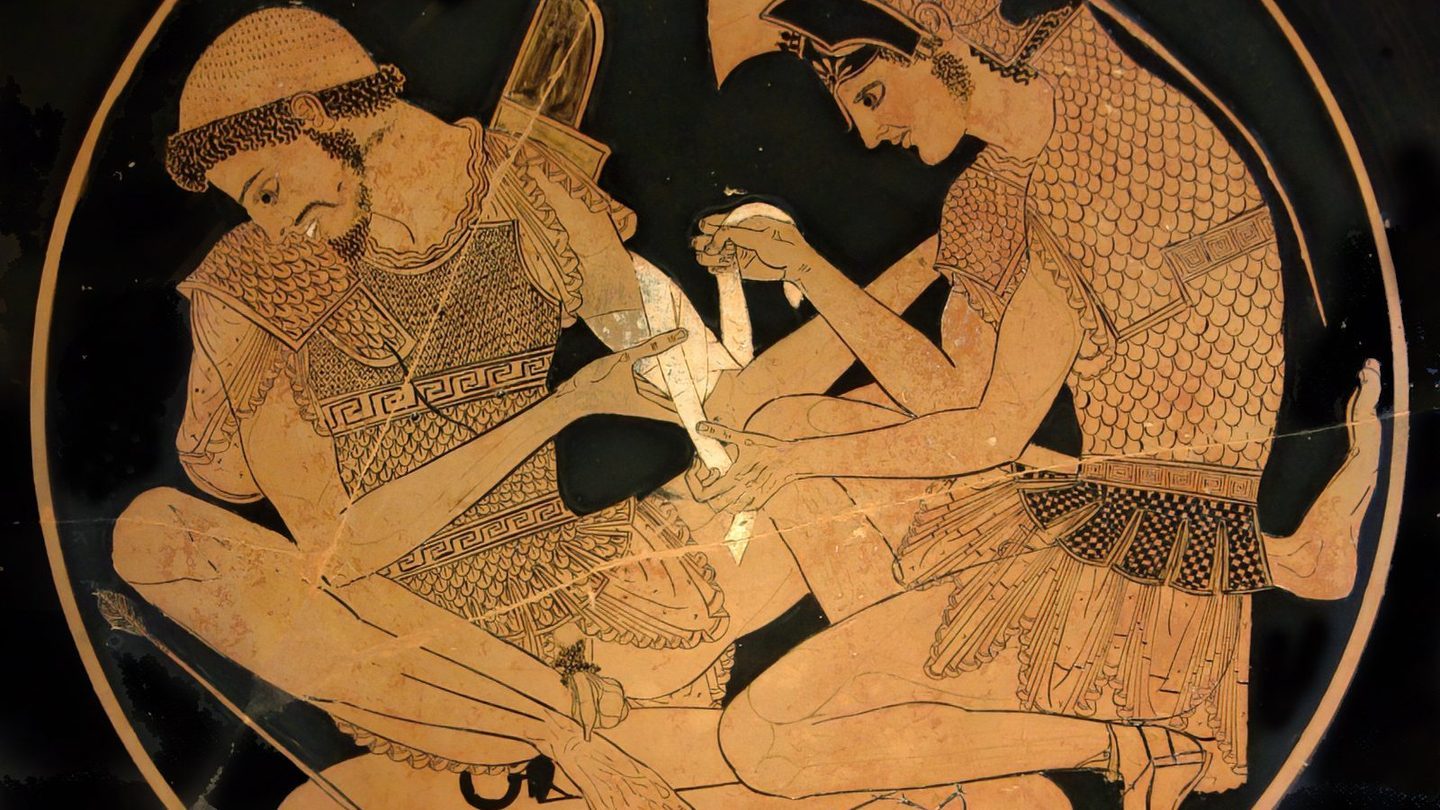
What Homer actually tells us about Patroclus
Patroclus is not a generic squire. He speaks in council, leads the Myrmidons when Achilles stays out of battle, and carries enough standing that Nestor addresses him directly with advice meant for Achilles. The poem's emotional center after Book 16 is Achilles' grief for this one man, not for the Greek army as a whole.
Homer never gives Patroclus an aristeia, a solo aristocratic battle scene, of his own before the borrowed-armor episode. His importance is relational: he is the person whose loss forces Achilles back into the war on terms that will kill him soon after Hector falls.
Genealogy, age, and the cousin tradition
Most genealogies make Patroclus a descendant of the nymph Aegina through his father Menoetius, which puts him on a branch of the same extended family as Achilles, who descends from Aegina through Aeacus and Peleus. Homer does not dramatize that kinship; he does dramatize age. Nestor quotes Menoetius telling Patroclus that Achilles outranks him by birth but that Patroclus is the elder (Iliad 11.786-789), a line later Greek writers used when they argued about which partner occupied which role in a male couple.
For the wider pantheon chart, see the Greek gods' family tree and Alcmene's branch of the same tree.
Book 16: armor, limit, and death
Patroclus proposes the disguise: Trojans might think Achilles has returned if they see the famous armor. Achilles agrees but orders him to drive attackers from the ships and then come back, explicitly warning against pursuing toward Troy (Iliad 16.83-100). Patroclus succeeds at the rescue and then keeps fighting until Apollo strips his protection and Hector kills him (16.777-863).
The step-by-step armor plan is laid out in why Patroclus wears Achilles' armor. The relationship debate sits in what Homer wrote about Achilles and Patroclus. Achilles' own death, which the Iliad never narrates, is covered in how Achilles dies.