
The short version, since most searches want it fast
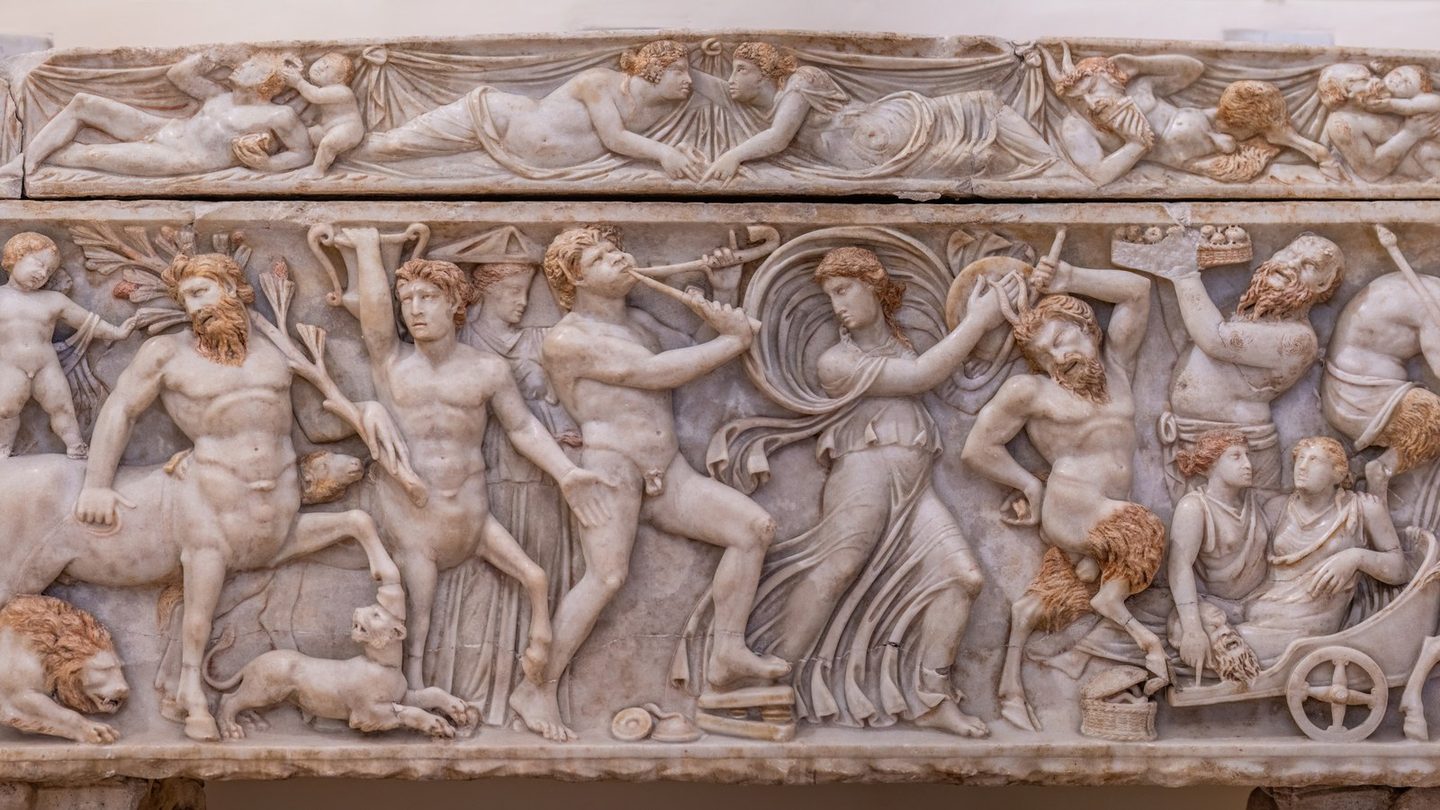
Ask what separates a faun from a satyr and most quick answers hedge, because in current usage the words function as regional synonyms: satyr is the Greek term, faun is the Roman one, and both now describe a human figure with a goat's legs, tail, and small horns. That equivalence is real today, but it's a late compromise between two creatures that started out looking and behaving nothing alike. On original shape, Greek satyrs were not goat-legged at all: through roughly the sixth century BCE they were drawn with the ears and tail of a horse, sometimes fully horse-legged in the earliest vase paintings, while the Barberini Faun, one of the oldest and best-documented Roman fauns, shows an entirely human male body without a single animal feature. On temperament, Greek satyrs were defined by ribaldry, companions of Dionysus, chasers of nymphs, and comic leads in the satyr plays performed alongside Athenian tragedy, while Roman fauns were milder countryside spirits, closer to well-meaning if foolish ghosts than to lechers. On how the two merged, Rome collapsed the distinction on purpose by treating its native fauns as the exact equivalent of imported Greek satyrs, and by the Renaissance, artists had given both creatures the goat legs and curling horns that actually belonged to a different god altogether.
Before the goat legs: what a satyr actually looked like
Strip away the goat legs and the earliest Greek satyr looks closer to a woodland horse-man than to Pan. Classical sources describe satyrs as male nature spirits with the ears and tail of a horse and, in the very earliest artistic representations, horse-like legs to match; human legs only became the standard depiction by around the sixth century BCE. Comically hideous by design, they were shown with mane-like hair, bestial faces, and snub noses, always naked, and characterized above all by their ribaldry: lovers of wine, music, dancing, and women, and constant, mostly unsuccessful pursuers of nymphs and mortal women alike.
Satyrs kept company with Dionysus, the wine god they served and celebrated, and in classical Athens they made up the chorus of the satyr play, a genre that parodied tragedy with bawdy, obscene humor. Only one complete example survives, Euripides's Cyclops, alongside a substantial fragment of Sophocles's Ichneutae. Mythology gave individual satyrs their own stories on top of the generic type: Marsyas is said to have challenged Apollo to a musical contest and been flayed alive for the presumption, while Silenus, tutor to the young Dionysus, was remembered in an Ionian story for handing out sound advice on the rare occasions he was pinned down long enough to give it.
The faun that looks nothing like a faun
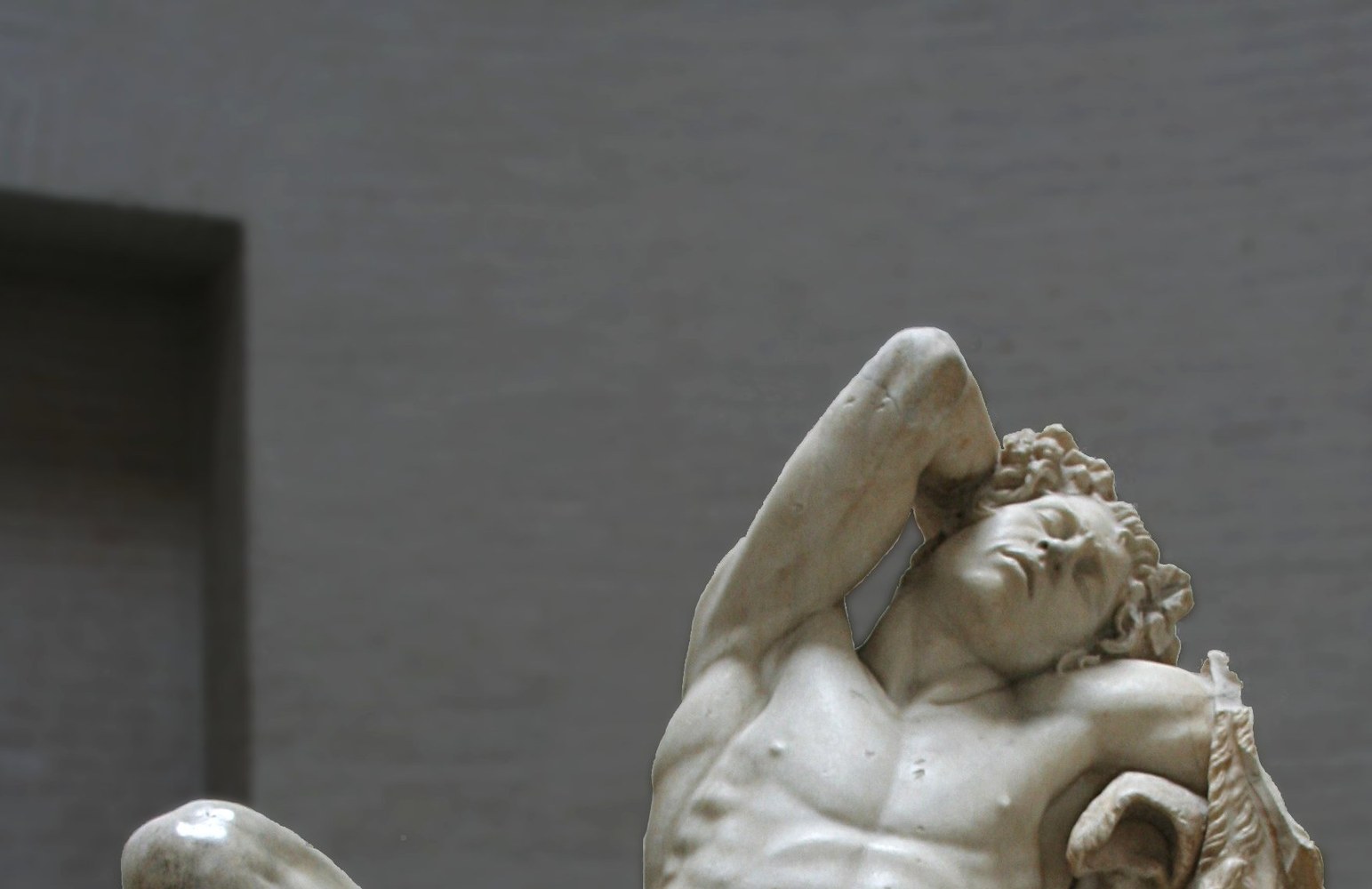
If satyrs started out horse-featured, the earliest well-documented Roman faun did not even have that much in common with the modern image. The Barberini Faun, a life-size marble statue now in the Glyptothek in Munich, shows a sleeping male figure with an entirely human body: no horns, no tail, no goat legs. It was pulled out of the moat below Castel Sant'Angelo, Rome's ancient Hadrian's Mausoleum, in the 1620s, badly damaged, missing its right leg and parts of both hands and head. The statue's first documented appearance is a restoration receipt dated 6 June 1628, by which point it already belonged to Cardinal Francesco Barberini, nephew of Pope Urban VIII. Historians date the carving itself to the late third or early second century BCE, either an original Hellenistic work of the Pergamene school or a high-quality Roman copy of one.
Restorers reworked the statue repeatedly over the following two centuries, most notably Giuseppe Giorgetti and Lorenzo Ottoni in 1679 and Vincenzo Pacetti in 1799, before it was sold that same year and eventually purchased by Ludwig, Crown Prince of Bavaria, for the museum built to house it. What makes the statue useful here is its official second name: museums and classicists alike also call it the Drunken Satyr. A statue with a completely human body, carrying zero of the features popularly associated with either creature, is filed under both names interchangeably, which says more about how loosely the two words are actually used by experts than any goat-legged illustration could.

Where the goat legs actually came from
Neither original creature owned the goat legs; they belonged to Pan, the rustic god Hermes fathered with the nymph Dryope. Over the course of Greek history, satyrs gradually became more human and less bestial in art, then began acquiring goat-like characteristics of their own specifically through conflation with the Pans, the plural forms of Pan that Greek artists used for a whole class of goat-legged nature spirits. Rome then finished the merge from its own direction: Roman writers identified their native fauns with the imported Greek satyrs outright, and eventually the distinction between the two collapsed entirely. Since the Renaissance, both satyrs and fauns have most often been represented with the legs and horns of goats, the borrowed look that neither creature started with.
The wife nobody invented, and the one they did
Roman religion had a genuine female counterpart to the faun. Fauna, also called Fatua or Fenta Fauna, appears in ancient sources as the wife, sister, or daughter of Faunus depending on the writer; the scholar Varro treated her as his direct female counterpart and credited the fauni generally with prophetic powers, while Servius, Lactantius, and Macrobius each recorded variations on the same tradition of a goddess who spoke or sang fated knowledge to Roman women. She was a real object of religious belief, not a later invention.
Greek satyrs got no such counterpart in actual myth. Classical Greek satyrs were exclusively male, and the female nature spirits they were paired with, nymphs, were a wholly different kind of being rather than female satyrs. A goat-legged female figure, now called a satyress, doesn't show up until Renaissance and later European art: Michelangelo included a haggard satyress nursing drunken toddlers in his 1533 relief The Children's Bacchanal, and the eighteenth-century French sculptor Clodion made a Female Satyr Carrying Two Putti, now held by the Walters Art Museum in Baltimore. The pattern runs backward from what modern readers might expect: the Romans worshipped a real goddess to match their faun, while the Greeks left their satyr without any mythological female counterpart at all, and later artists had to invent one from scratch.
Why Narnia calls him a faun, not a satyr
The two words also split along a tone line that has nothing to do with legs or horns. Over the twentieth century, satyrs in popular culture lost much of their original obscenity and became tamer, more domestic figures, and in that softened form they are most often called fauns, especially in fantasy and children's literature. That's the direct explanation for C. S. Lewis's Mr. Tumnus, introduced in 1950 and explicitly identified in the text as a faun: a gentle, goat-legged figure built for a children's story needed the word that had already been stripped of the original satyr's reputation, not the one still carrying it.
Other franchises don't even agree with each other on the split. Rick Riordan's Percy Jackson and Heroes of Olympus books default to calling their goat-legged protector characters satyrs, but a Roman-raised character in the series refers to the same type of being as a faun, dramatizing the exact Greek-versus-Roman word choice this article is about inside the fiction itself. None of it has anything to do with the unrelated word fawn, for a baby deer: faun traces back to Faunus, a name most likely rooted in a Proto-Italic word for "favourable," while fawn descends from the Latin fetus, meaning offspring, by way of Old French faon. The two words only sound alike.
Satyrs and fauns aren't the only Greek hybrid whose familiar shape turns out to be softer evidence than it looks. Ancient writers couldn't even agree on the most basic fact about the Minotaur: Plutarch preserves a rival account, credited to the historian Philochorus, in which Theseus's opponent on Crete was never a bull-headed monster at all, just a Cretan general beaten in a wrestling match. If a figure as fixed in popular imagination as the Minotaur can turn out to be a later flattening of a messier original record, two nature spirits quietly swapping legs and temperaments between Greece and Rome is the ordinary case, not the exception.