A willow’s meaning depends on its setting
What do willow trees symbolize? A lover’s song, a religious lament, a farewell ceremony, and a living tree each supply a setting for the answer. The drooping shape of a weeping willow makes sadness an easy association to recognize. Shape alone cannot tell you which story an artist, poet, or mourner intended. A tree beside water can also be part of an ordinary landscape.
| Setting | Supported reading | Evidence to look for |
|---|---|---|
| Desdemona’s willow song | Abandoned love and sorrow | Barbary’s story in Othello |
| Psalm 137 | Exile and longing for home | Hung instruments; translation choice |
| Chinese farewell ceremony | Parting and remembrance | Branches presented as farewell gifts |
| Rooting a cutting | Recovery as a possible metaphor | Plant behavior, separate from historical belief |
This comparison separates an interpretation supported by a named source from a personal meaning you might choose for a drawing, tattoo, or memorial. A personal symbol and a historical interpretation answer different questions. A private association does not need an ancient pedigree, and a historical claim needs more than an attractive resemblance.
Desdemona’s song makes lost love explicit
In Othello, Act 4, scene 3, Desdemona remembers her mother’s maid Barbary, whose lover left her. Barbary sang a willow song and died singing it. Desdemona then sings the remembered song while Emilia prepares her for bed. The Royal Shakespeare Company’s explanation identifies the willow here with lost or unrequited love.
The refrain in the play’s text is “Sing willow, willow, willow.” The speaker’s sorrow, sighing, and tears make the association legible without a separate dictionary of plant symbols. Desdemona’s recollection also makes the song unsettling: she is thinking about an abandoned woman while her own marriage is in danger. That is an interpretation of the scene, grounded in what she says and does.
In a literary essay, identify the character and the speech before explaining the tree. Writing that the willow “means sadness” misses the kind of sadness the scene specifies. Writing that every willow in English literature means an unfaithful partner goes beyond this evidence.
Ophelia’s willow is part of a reported death
Hamlet, Act 4, scene 7 supplies a different scene. Gertrude tells Laertes that Ophelia drowned. Her account begins with a willow leaning over a brook. Ophelia has made flower garlands; while she climbs to hang them on its branches, a sliver breaks and she falls into the water. Her waterlogged clothing eventually pulls her down.
The tree belongs to a detailed account of flowers, singing, water, and death. A reader can reasonably connect it with grief and vulnerability. It also has a literal role: the branch breaks. Treating the willow only as a decorative sign of sorrow erases that action.
The two plays therefore offer related but distinct uses. Desdemona remembers a song about a deserted lover. Gertrude describes the place and circumstances of Ophelia’s drowning. Keep those accounts separate when identifying a quotation or explaining an image inspired by either character.
Psalm 137 requires a translation check
In Psalm 137:1–4, the speakers weep beside Babylon’s waters as they remember Zion. Their instruments hang on trees, and their captors demand a song. The King James Version calls the trees “willows”; the New International Version calls them “poplars.” The emotional setting is exile, humiliation, and longing for home.
Check the translation when identifying a painted tree or explaining a biblical association. A quoted English tree name tells you what that translation says. It does not settle the botanical identity of the trees in the passage. A photograph of a weeping willow cannot establish that identity either.
For a caption, use wording such as “a willow recalling the lament in Psalm 137,” and name the translation if you quote it. For a discussion of the passage itself, mention the alternative wording. That preserves the association with sorrow while keeping a translation choice from becoming an unsupported plant identification.
A farewell branch can express continuing attachment
A Chinese farewell use is visible in the Beijing 2022 Winter Olympics closing ceremony. The official account of the event describes people holding willow twigs in a farewell sequence and explains the custom as a parting gesture. Here a branch expresses remembrance of someone leaving. Departure can be painful without being a death or a broken romance.
Use that distinction when choosing a willow for a goodbye message. A branch offered to a departing friend can carry the hope of continued attachment. Calling it a funeral symbol would impose a different occasion on the gesture. The ceremony is a documented example of how the association was presented; it does not date the beginning of the custom.
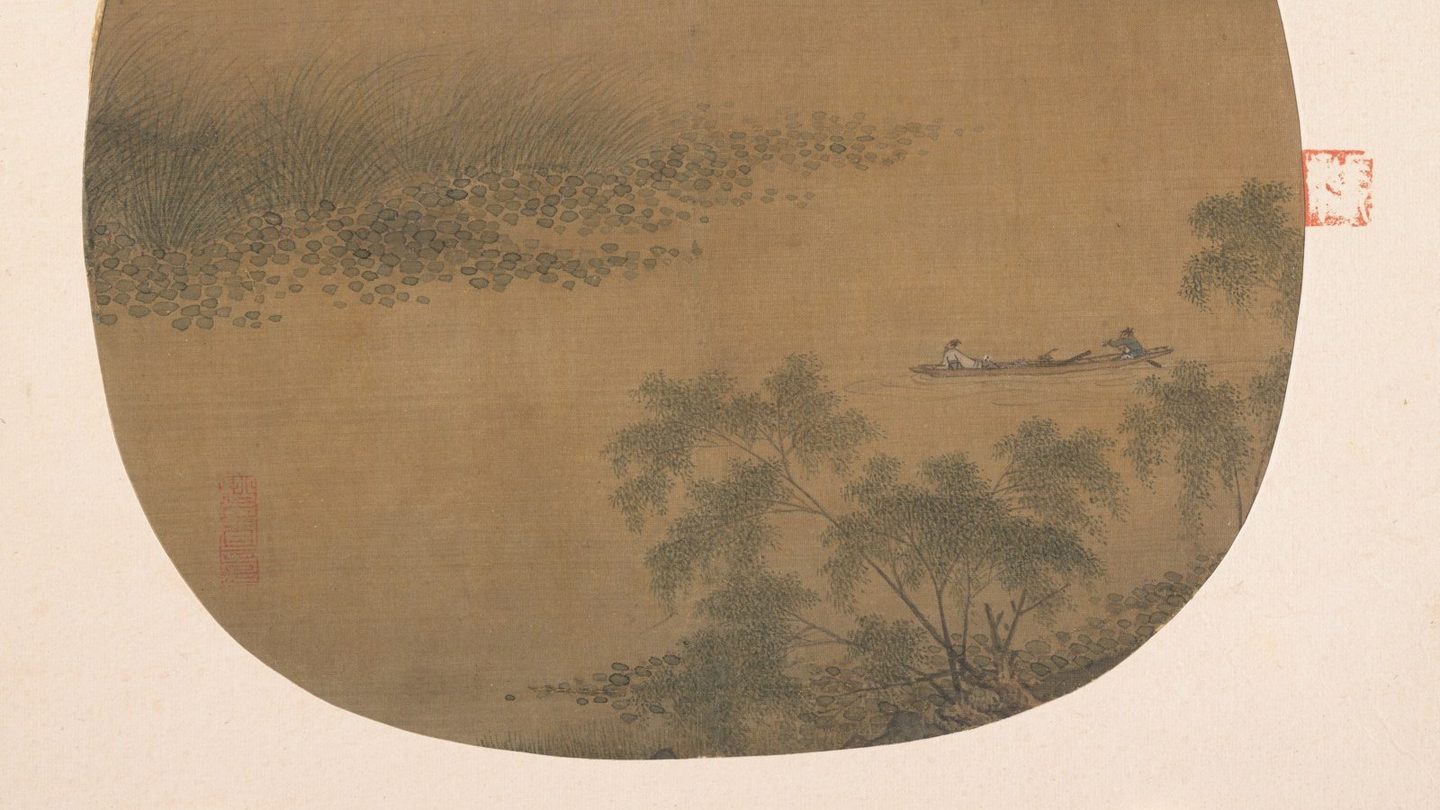
Nor should every Chinese painting of a willow be read as a farewell. The Smithsonian’s Landscape: Tea sipping under willows shows gentlemen taking tea in shade beside a river. Its teaching material discusses the gathering and tea culture. The willow provides a setting for sociability. Figures, inscriptions, and the occasion of the work help determine whether a more specific symbolic reading is justified.
Renewal starts with a plant fact, not a universal belief
Kew’s account of the weeping willow notes how readily cuttings root in moist soil. That behavior offers a concrete basis for a metaphor of recovery: a severed piece can begin growing again. If you choose a willow to represent starting over, you can explain that connection plainly.
The biological observation and the history of an idea remain separate claims. Easy rooting does not establish that all ancient cultures treated the tree as immortal, or that every modern account of willow spirituality preserves an old teaching. To make either assertion, you would need evidence from the particular community and period.
If your question concerns divine figures associated with the natural world, the guide to nature goddesses distinguishes their different roles. The Demeter symbol guide looks at the attributes of a named deity. Those are narrower questions than asking what a tree can mean. For another image associated with renewed life, see the phoenix guide; a myth about a creature needs its own evidence.
Protection and good luck belong to named customs
The Met’s Tales and a Tune of the Willow records contrasting English traditions: willow twigs hung on doors against marsh-witches in Essex, and willow identified with witches in East Yorkshire. It also describes willow brought indoors for May Day luck in Herefordshire. These are reported local beliefs, not evidence that a tree protects a house or changes someone’s fortune.
Willow could be treated as a defense against a feared force in one account and associated with that force in another. A label such as “the ancient spiritual meaning of willow” conceals the information needed to understand either custom: who believed it, where, and on what occasion.
For a modern spiritual use, state the meaning as a chosen practice or an account from a named tradition. Avoid turning a symbolic description into a medical claim or a promise of supernatural results. A tree can have emotional importance without those claims being necessary.
Download a worksheet for checking a willow claim
Download the willow symbolism worksheet to record a claim alongside its source. It includes worked examples from this article and blank rows for a poem, artwork, memorial, or tradition you want to investigate. It is a source-checking template, not a list of verified meanings for every culture.
Begin by copying the exact claim. Add the name of the work, speaker, community, or object. Record the passage or visible detail that supports your reading, then write down what it does not establish. In the biblical example, the setting supports exile and sorrow, while the differing tree names leave a botanical question open.
Finally, decide how to word your own explanation. “In this scene, the willow accompanies abandoned love” is traceable. “Willows have always meant betrayal” requires evidence the scene cannot provide. If no source identifies a cultural meaning, describe the visible tree or explain your personal association. A reader can then check the source and see how the explanation was reached.