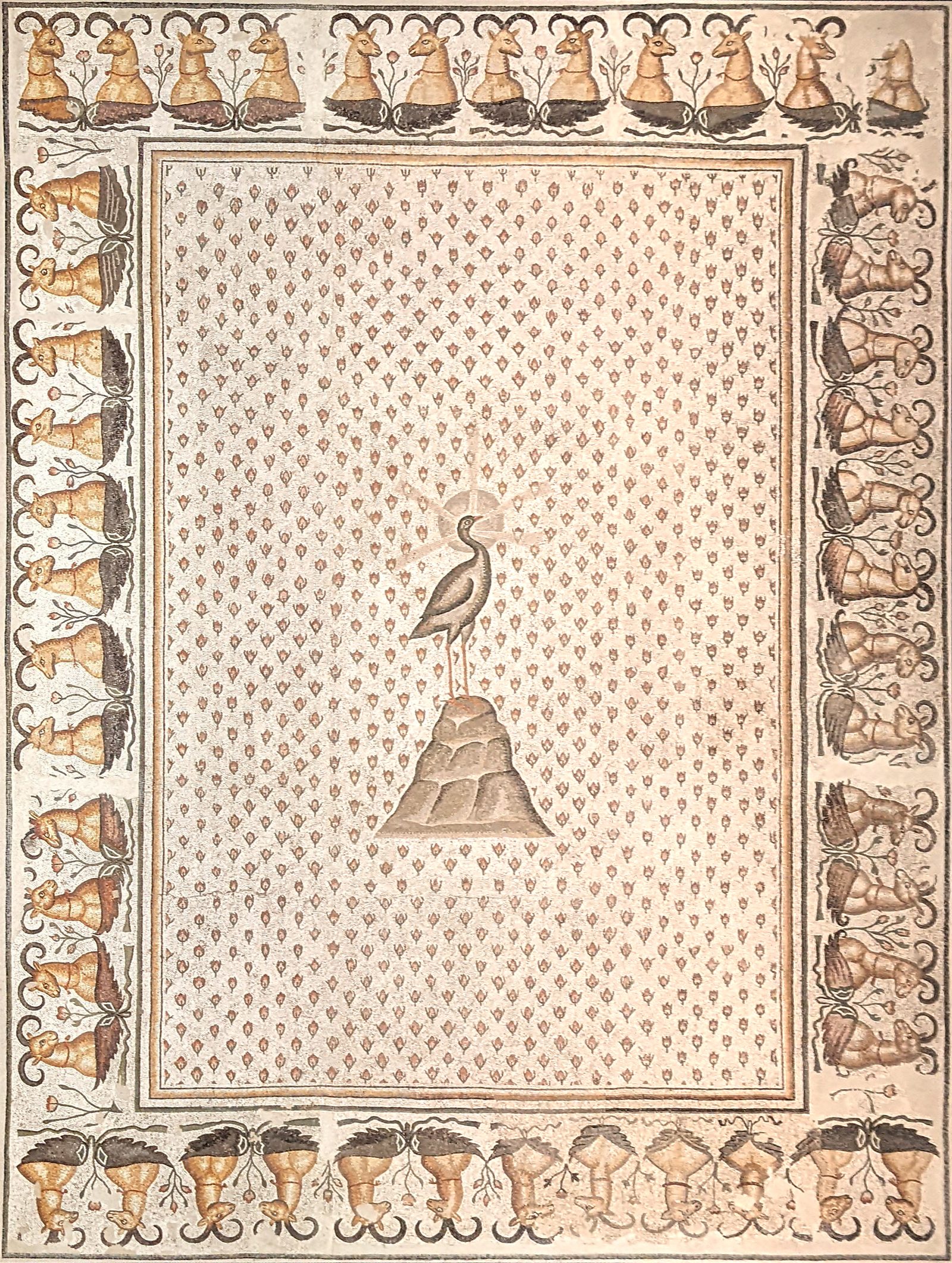

One bird, or four?
Search "phoenix bird" and the results are clean: Wikipedia, an EBSCO research starter, Ancient Origins, a Study.com lesson page, a mythology fandom wiki, a birding site's history feature. No streaming platform, no product line, no unrelated brand crowding in on the word the way a search for "Zeus" runs into a reality-TV network. The story that comes back is consistent, too: a magnificent bird lives for centuries, bursts into flame, and rises reborn from its own ashes, a symbol of renewal that, as more than one lesson page puts it, shows up "in nearly every culture."
That last phrase is doing a lot of quiet work. Birds resembling the phoenix really do show up across Egyptian, Greek, Roman, Christian, Chinese, and Slavic sources. They are not all telling the same story. Egypt's Bennu never burns itself up in the oldest surviving accounts of it. China's Fenghuang isn't a single bird to begin with, and doesn't die. Slavic folklore's Firebird doesn't die either, for a different reason: its whole myth is built around never letting anyone catch it long enough to kill it. Only one of the birds routinely called "phoenix" is actually about combustion and rebirth, and even that version didn't arrive with fire attached.
A skeptical historian, and a burial, not a fire
The written trail starts with Herodotus, the Greek historian, writing in the 5th century BC in Book 2 of his Histories. He is upfront that he never saw the bird himself, only "in pictures," and relays what he was told by priests at Heliopolis, in Lower Egypt: the bird visits only once every five hundred years, arriving when its parent dies. What it does next has nothing to do with fire. In the priests' account as Herodotus records it, the bird plasters its dead parent's body in myrrh, hollows out a ball of the same myrrh exactly heavy enough to carry the corpse, seals it inside, and flies the whole thing to the Temple of the Sun at Heliopolis for burial.
Herodotus doesn't pretend to believe any of it, writing in George Rawlinson's standard translation that the story "does not seem to me to be credible." An origin account explicitly filed under "priests told me this, and I doubt it" is the entire foundation the later, far more famous fire-and-ashes version was eventually built on.
The Egyptian bird underneath the Greek story
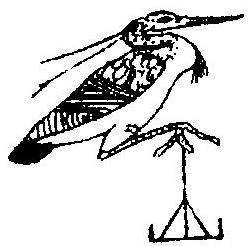
The city Herodotus names, Heliopolis, was not neutral ground. It was the seat of one of ancient Egypt's rival creation theologies, built around the sun god Atum and his nine-god Ennead. Its own priesthood had already spent centuries developing a very different sacred bird: the Bennu, self-created out of the primeval waters, closely tied to Ra, whose ba, or soul, it was said to embody, and to Osiris, the resurrected god of the dead, in whose sacred willow tree the Bennu was said to perch. In one version of Heliopolis's own creation account, it was the Bennu's cry, flying alone over the formless waters of Nun, that marked the beginning of time itself.
None of that is a fire-and-ashes story. Egyptian sources describe the Bennu as self-generating and bound up with renewal in the sense that all solar and Osirian symbolism is about renewal, sunrise following sunset, Osiris resurrected after Set kills him, but they do not describe the specific mechanic of combustion followed by rebirth from cinders. That detail isn't in the Egyptian religion Herodotus was drawing on. It gets added afterward, by writers who were Greek and Roman, not Egyptian.

Where the fire actually comes from
The self-immolation now treated as the whole point of the myth shows up centuries after Herodotus, layered on by Roman writers. In Metamorphoses (15.385), Ovid has the bird build a nest of cassia, spikenard, myrrh, and cinnamon atop a swaying palm at the end of its five-hundred-year life, settle into it, and die there; a new phoenix is reborn from its father's body and, once strong enough, carries the nest, now both cradle and tomb, to the Temple of the Sun at Heliopolis, the same destination Herodotus's priests named five centuries earlier for the myrrh-egg burial. Pliny the Elder's Natural History, written around 77 AD, stretches the bird's life further still: citing the astrologer Manilius, he puts it at 540 years, and describes a bird with a gleam of gold around its neck, purple plumage, and a blue tail flecked with rose.
Early Christian writers picked the story up almost immediately for their own purposes. Around 96 AD, Clement of Rome, writing to the church at Corinth in what is now called 1 Clement, one of the oldest surviving Christian texts outside the New Testament, cites the phoenix as "that wonderful sign" that resurrection isn't as far-fetched as it sounds, since nature apparently does it already. His version of the mechanism is stranger than "burns to ashes, rises again": the dying bird's decaying flesh breeds a worm, the worm feeds on the corpse and grows feathers, and once it has strength, it is the worm-turned-bird that carries its parent's bones to Heliopolis. Even within what gets treated as one continuous Western tradition, the story of how the bird actually comes back keeps changing from writer to writer, a looser thread than the second birth built into Dionysus's own myth, stitched from a myrrh-sealed corpse, Roman fire, and a resurrection-hungry church at Corinth, not handed down intact from a single source.
Even the Roman historians who treated the phoenix as a real, datable event couldn't agree on the basic facts. Tacitus, in the Annals (6.28), records that a phoenix reportedly appeared in Egypt in AD 34, during Tiberius's reign, then spends most of the chapter picking the report apart, noting that Pliny the Elder and the historian Dio later dated the same supposed appearance to AD 36 instead, and floating the possibility that the whole sighting was fabricated. A bird already reworked by Herodotus, Ovid, Pliny, and Clement of Rome couldn't even get a consistent origin story once ancient writers tried to treat one specific appearance of it as current events rather than legend.
A bird from a different family entirely
China's Fenghuang gets called "the Chinese phoenix" constantly, but the family tree doesn't connect. Bird imagery associated with what became the Fenghuang appears in Chinese jade and pottery from the Hongshan culture, more than 7,000 years old, long before Herodotus was born and long before Egypt's Old Kingdom raised the pyramids the Bennu was worshipped alongside. The Fenghuang wasn't even one bird for most of its history: feng was male, huang was female, and Han-dynasty art shows the pair depicted facing each other, only merging into the single word "fenghuang" as late as the Yuan dynasty.
Nothing in that lineage involves dying and coming back. The paired birds represent yin and yang in cosmic balance, and in later, more fixed iconography the Fenghuang is paired with the dragon to symbolize marital harmony between empress and emperor. Encyclopaedia Britannica is blunt about the resemblance to the Western bird: its "mythological similarities with the Western/Persian phoenix are superficial." Same rough shape in English translation, no shared plot.
The bird that survives by never being caught
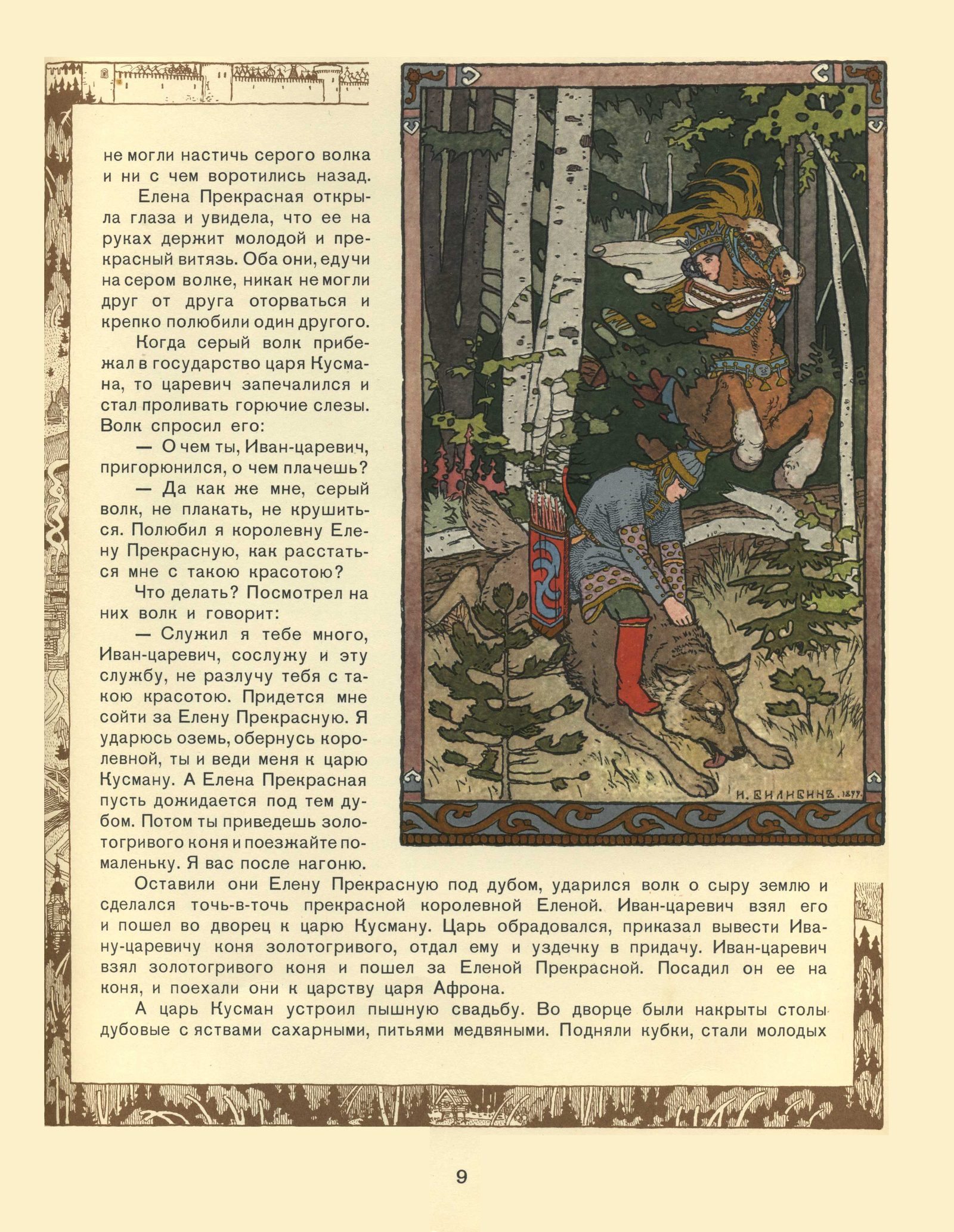
Slavic folklore's Firebird, Zhar-ptitsa, roughly "ember-bird," doesn't resolve its myths through death at all. Its best-known role is in Russian fairy tales built around Prince Ivan chasing a glimpse of it, illustrated famously by Ivan Bilibin in 1899 for the tale of Prince Ivan, the Firebird, and the Grey Wolf: a glowing feather is found, a hunt begins, and the bird itself is never actually pinned down and killed. Nineteenth-century folklorist Alexander Afanasyev read the figure as a personification of fire, light, and the sun, rooted in pre-Christian Slavic sky worship, the same broad category of solar bird as the Bennu and the phoenix, but built around evasion rather than sacrifice.
That's a structurally different story, not a stylistic variant of the same one. The phoenix's whole plot depends on it dying. The Firebird's whole plot depends on it not being caught long enough to die. Both routinely get filed under "phoenix myths" in English-language roundups; only one of them is actually about a death.

One word doing four jobs
None of this means the connections are fake. Herodotus really did set his skeptical Greek retelling inside an Egyptian temple city that already had its own solar bird theology. Clement of Rome really was reaching for existing Greco-Roman phoenix lore, not inventing a new bird, when he needed a natural proof of resurrection. What's fake is the flattening: the idea, repeated across lesson pages and roundup articles, that "the phoenix" is one continuous myth that different cultures happened to arrive at independently, or that every version tells the same rise-from-ashes story. Egypt's Bennu doesn't burn. China's Fenghuang doesn't die. Slavic mythology's Firebird doesn't either.
The one throughline that actually holds across all four is looser than resurrection: a singular, spectacular bird bound up with the sun or with fire, distinctive enough that English translators, working centuries and continents apart, kept reaching for the same convenient word. The same impulse, applied to a very different feathered deity tied to the morning star rather than the sun, on a continent no version of the phoenix ever reached, shows the pattern isn't unique to birds, either: a striking enough figure gets mythologized first, and only gets squeezed into someone else's vocabulary later, when it needs translating.