Where the tree starts: three beings with no parents at all
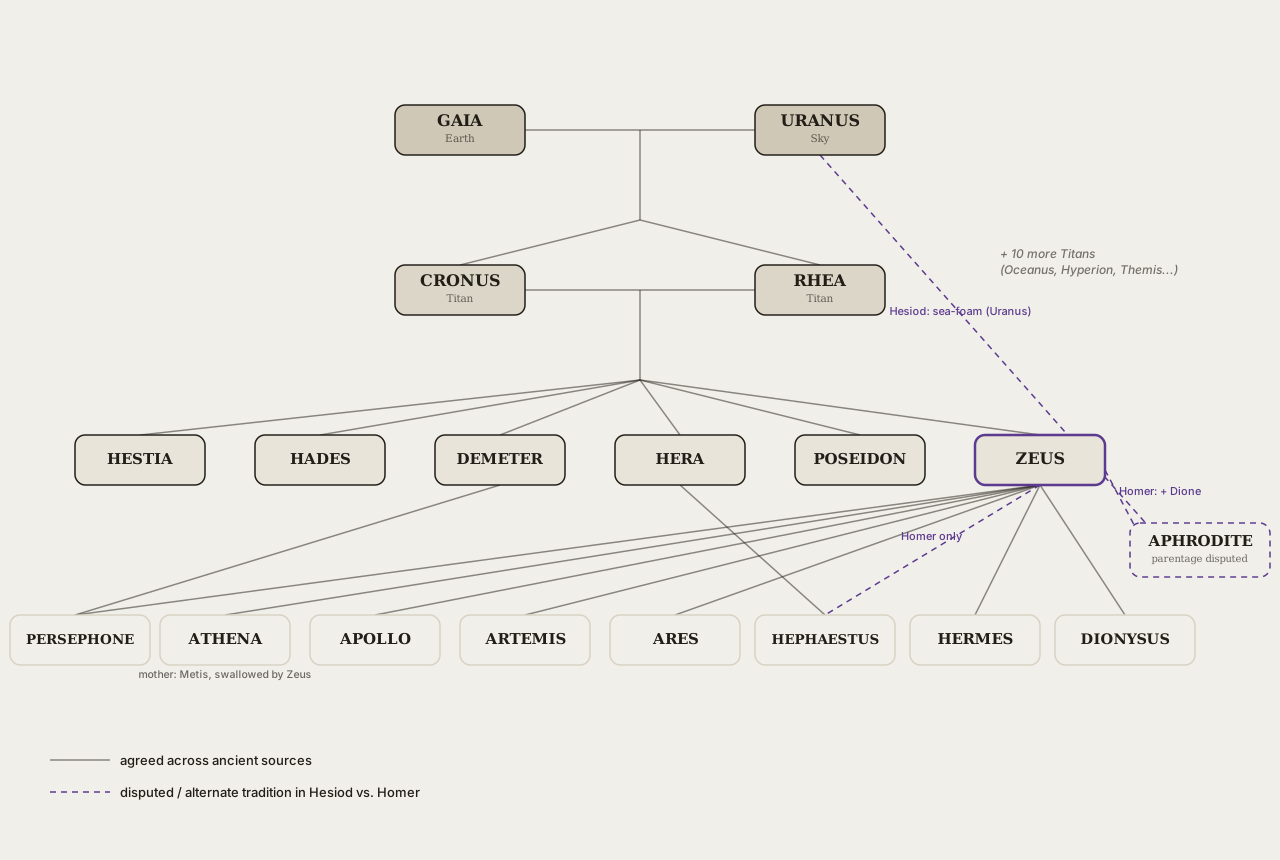
Hesiod's Theogony, composed around 700 BC and the closest thing Greek mythology has to a founding genealogical text, does not open with a creator god making the universe. It opens with Chaos, described as a yawning gap or chasm, simply coming into being first, with no explanation of where it came from. Gaia, the personification of Earth, follows shortly after, along with Tartarus, the pit beneath the underworld, and Eros, primal desire. None of the four have parents. They are the starting point the rest of the tree branches from, not products of it.
Gaia then produces Uranus, the Sky, by herself, without any father, and afterward mates with her own creation. Together they have the twelve Titans, Hesiod's own count: the brothers Oceanus, Coeus, Crius, Hyperion, Iapetus, and Cronus, and the sisters Theia, Rhea, Themis, Mnemosyne, Phoebe, and Tethys. The same pair also produces the three Cyclopes and the three Hecatoncheires, hundred-handed giants, both groups so unsettling to Uranus that he shoves them back inside Gaia's body as soon as they are born, refusing to let them see daylight. Gaia, in pain from carrying them, forges a plan with her youngest son.
Cronus castrates his father, and the throne changes hands twice
Gaia gives Cronus a sickle made of adamant and asks him to act against Uranus on her behalf. Cronus ambushes his father and castrates him; the severed flesh lands in the sea, a detail that turns out to matter for a different god's family tree (below). Cronus becomes ruler in Uranus's place and marries his own sister Rhea, one of the twelve Titans from the generation above.
Cronus then repeats his father's mistake almost exactly. Warned that one of his own children is destined to overthrow him, the same fate he handed Uranus, he swallows each child whole as Rhea gives birth to them: Hestia, Demeter, Hera, Hades, and Poseidon, in that order. When Rhea becomes pregnant a sixth time, she goes to Gaia and Uranus for help, travels to Crete, and hides the newborn Zeus in a cave on Mount Aegaeon, handing Cronus a stone wrapped in swaddling cloth to swallow in his place. Cronus never notices the substitution. Zeus grows up on Crete, eventually forces Cronus to disgorge his swallowed siblings, and leads them through a ten-year war against Cronus and most of the other Titans, the Titanomachy, that ends with Zeus and his siblings, including Poseidon, in control of the cosmos.
The branch nobody draws the same way twice: Aphrodite's two births
Hesiod's Theogony gives Aphrodite the strangest origin of any major Olympian. When Cronus threw Uranus's severed genitals into the sea, Hesiod writes, "a white foam spread around them from the immortal flesh, and in it there grew a maiden," in the Evelyn-White translation. She drifts first to the island of Cythera and then to Cyprus, stepping ashore as a fully formed goddess with no mother, no childhood, and, notably, no connection at all to the Olympian family line that descends from Cronus and Rhea. On Hesiod's version of the tree, she is technically Uranus's daughter and Cronus's half-sister, born a full generation before Zeus.
Homer's Iliad gives a completely different account and does not acknowledge Hesiod's version at all. In Book 5, when Aphrodite is wounded on the battlefield by the mortal Diomedes and flees to Olympus in tears, it is Dione, a Titaness otherwise barely mentioned in surviving mythology, who comforts her as her mother, asking who among the gods has hurt "dear child" so recklessly. That line only makes sense if Dione is Aphrodite's parent and, by implication, Zeus is her father. Both versions circulated throughout antiquity without either one displacing the other. Roman writers later folded both origins into Venus without picking a winner either.
Two more gods born outside the usual pattern: Athena and Hephaestus
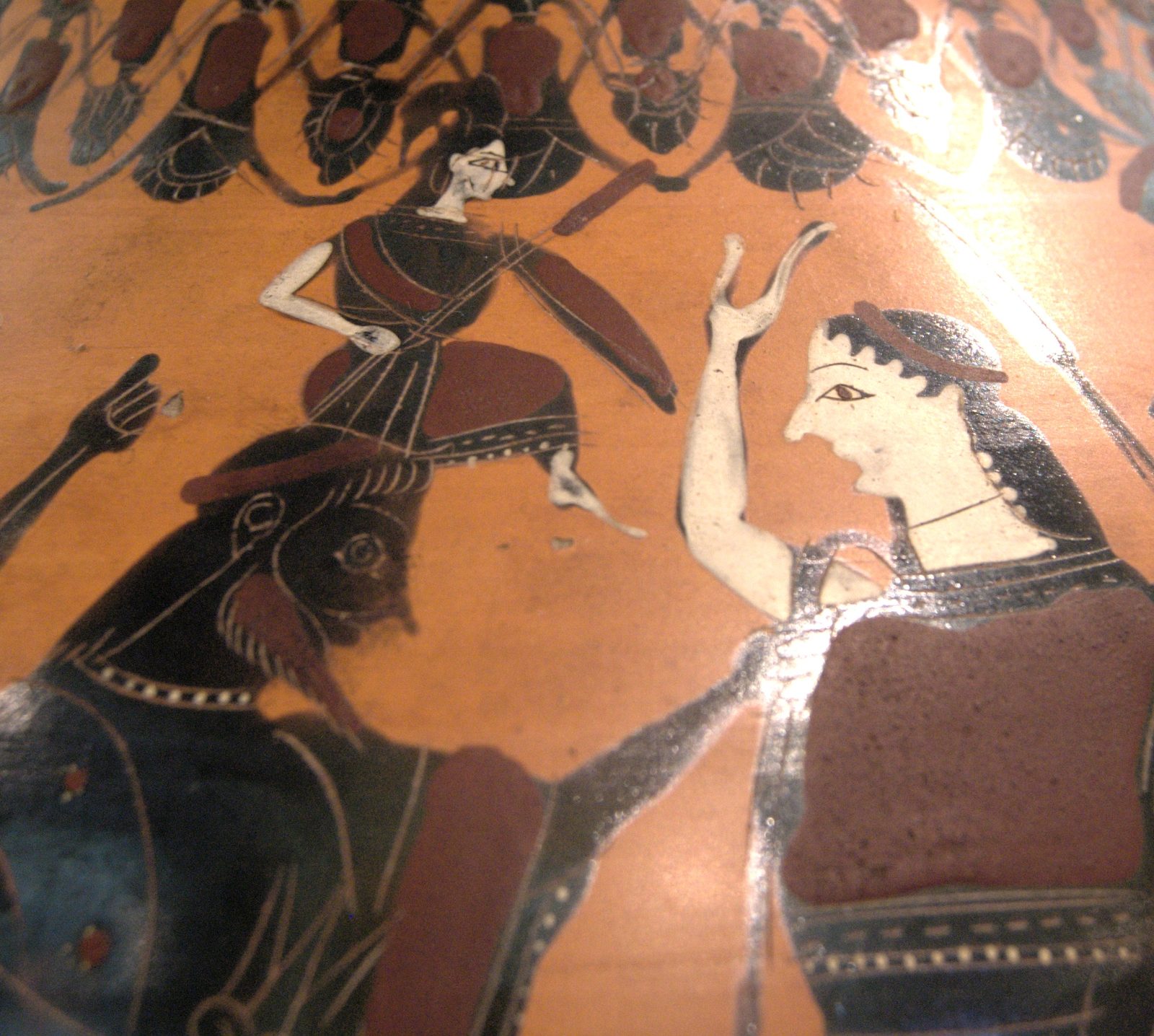
Zeus's first union, according to Hesiod, is with Metis, a goddess of cunning intelligence. Warned that a son of Metis is fated to overthrow him, exactly the pattern that already cost Uranus and Cronus their thrones, Zeus swallows Metis whole while she is pregnant rather than risk it. Later, Hesiod writes, "the father of men and gods gave her birth by way of his head," and Athena emerges fully grown and armored, with no conventional birth at all. Later tradition adds that Hephaestus, or in some versions Prometheus, split Zeus's skull open with an axe to let her out.
Hera's response, in Hesiod's account, is to do the same thing back to him. Furious that Zeus produced a child without her involvement, she bears Hephaestus by herself, "without union with Zeus," a deliberate mirror of what he had just done to her. The Odyssey tells a quieter version of the same relationship: it refers to Hephaestus as having two parents, implying joint descent from Zeus and Hera after all, with no mention of a solo birth or the grudge behind it. The two most unusual births on the entire Olympian family tree exist, on Hesiod's telling, because Zeus and Hera were each retaliating against the other's earlier unusual birth.

Why the ancient family tree never points in just one direction
Hesiod's Theogony was not a transcription of an agreed state religion. It was one poet's attempt, writing around 700 BC, to take a much messier patchwork of regional oral traditions, spread across different city-states and cult centers that each told these stories their own way, and organize it into a single continuous genealogy. Even within his own poem, that project was never fully finished: the Aphrodite and Hephaestus material sits alongside details that later Greek writers openly contradicted.
Centuries later, an anonymous author now called Pseudo-Apollodorus compiled the Bibliotheca, generally dated to the 1st or 2nd century AD, a systematic reference work drawing on earlier sources that has been called the most valuable mythographical text to survive from antiquity. Even that later, more organized compilation preserves competing versions of stories like Aphrodite's birth rather than declaring one of them official. The dispute over who actually belongs among the twelve Olympians runs on the identical problem: no single ancient authority ever had the standing to settle it. Dionysus shows the same pattern from another angle, where 20th-century classicists argued over his place in the pantheon until a 1990 archaeological find, not a vote among ancient sources, finally moved the needle. Modern family tree charts differ from each other today largely because their compilers are drawing different branches from different ancient poets, not because anyone invented new mythology.