
One name covers at least three unrelated religions
Type "Kemetism" into a search engine and the results treat it as a single coherent religion, a modern revival of the beliefs ancient Egyptians once held about Ra, Isis, Osiris, and the rest of the Netjeru. The name comes from Kemet, the Egyptians' own word for their country, meaning roughly "the black land," a reference to the dark silt the Nile left behind each time it flooded. What that single label hides is that the modern religion built on it was never one organization. It is a loose category covering at least three separate groups, founded independently across fifteen years by people who were not working together, drawing on the same ancient sources to build three different institutions with three different theologies.
Wikipedia's own entry on Kemetism sorts the movement into three basic types: reconstructionist groups that try to rebuild ancient Egyptian ritual as closely as the sources allow, syncretic groups that blend Egyptian deities into other traditions, and Kemetic Orthodoxy, the most centralized branch and the one most often described as leaning furthest toward monotheism, even though the House of Netjer's own materials describe its theology as monolatry rather than monotheism outright. Treating those three as one continuous "Kemetism," the way a search snippet or an infobox tends to, erases exactly how different their founding stories are.
Brooklyn, 1973: the earliest of the three
The Ausar Auset Society was founded in Brooklyn, New York, in 1973 by Ra Un Nefer Amen, three years before the Fellowship of Isis and fifteen before Kemetic Orthodoxy. The Society frames ancient Egyptian and Nile Valley spiritual practice as a heritage belonging specifically to the African diaspora, not as a reconstruction of one ancient nation's religion for its own sake, built around Amen's multi-volume core text, Metu Neter ("Word of God"). The organization, based in Brooklyn, now has chapters across several U.S. cities as well as international branches in London, Toronto, Bermuda, and Trinidad and Tobago. Amen himself came to this work sideways: trained originally as a concert pianist and composer, he set that career aside for what the Society describes as the spiritual education and uplift of African people. Neither that biography nor the Society's Pan-African framing has any real equivalent in the two Kemetic groups founded afterward.
A goddess-focused fellowship took a different path in Ireland
Three years after the Ausar Auset Society was founded, an entirely separate religious body took shape at Huntington Castle in Clonegal, County Carlow, Ireland, on the Vernal Equinox of 1976. The Fellowship of Isis was founded by the siblings Olivia Robertson and Lawrence Durdin-Robertson, along with Lawrence's wife Pamela, growing out of a smaller meditation group the family had been running at the castle since 1963. Where the Ausar Auset Society centers a whole Egyptian pantheon within a Pan-African frame, the Fellowship narrows almost entirely to Isis, worshipped, in Olivia Robertson's own words, as "God in female form."
The Fellowship explicitly rejects being filed under Neopaganism, despite centering a pagan goddess: it describes itself instead as a multi-faith organization open to people of any religion. In a statement issued November 15, 2002, Olivia Robertson put a number on that openness: "We are happy to have 1000's of Pagans among our 21,000 members in so many countries. But we also have Catholics, Protestants, Buddhists, Spiritualists and Hindus as members. All love and follow the religion of Isis of 10,000 Names." In August 1993, delegates from the Fellowship attended the Parliament of the World's Religions in Chicago, an event Wikipedia's account of the Fellowship describes as "the first time that the Religion of the Goddess has been acknowledged as a world faith" at that gathering, a kind of institutional recognition neither of the other two Kemetic branches has claimed.
Kemetic Orthodoxy built its authority around a single, named kingship
The youngest and best-documented of the three, Kemetic Orthodoxy, was founded in 1988 by Tamara Siuda. Its central institution, the House of Netjer, runs its main temple out of Joliet, Illinois, though it maintains shrines staffed by priests in multiple countries. It does not distribute authority the way the other two groups do; instead, Kemetic Orthodoxy built a single, named leadership role modeled directly on Egyptian kingship, with Siuda holding the title Nisut, sometimes translated simply as "Pharaoh."
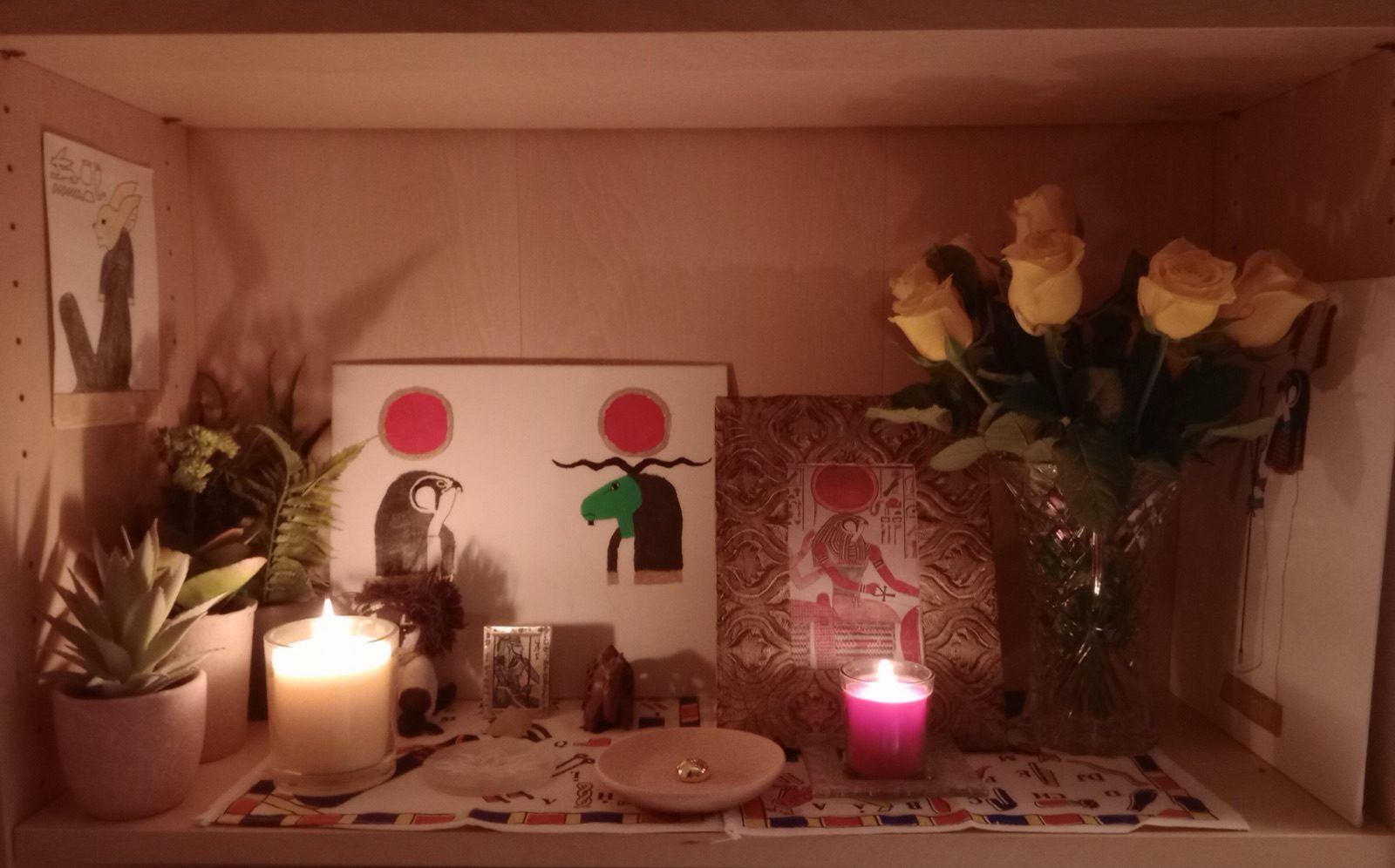
Membership rests on five stated principles: upholding ma'at, the ancient Egyptian concept of cosmic order and truth; belief in Netjer, a single divine power whose many "Names" the old gods like Ra, Osiris, and Anubis are understood to represent; veneration of akhu, or ancestor spirits; participation in the wider community; and, until 2023, acknowledgment of Siuda as Nisut. Members call themselves Shemsu, and their private altars, incense, offerings, and a statue or image of the god being addressed, follow the same basic pattern ancient Egyptian household worship did.
Kemetic Orthodoxy's internet-based organizing model drew academic attention early. Sociologists Marilyn Krogh and Brooke Pillifant profiled the group in a 2004 research note in the journal Sociology of Religion, and Egyptologist Paul Harrison, then a doctoral researcher at University College London, built an entire ethnographic study of the House of Netjer around it for his 2017 book, Profane Egyptologists.
The unbroken-lineage claim doesn't hold up
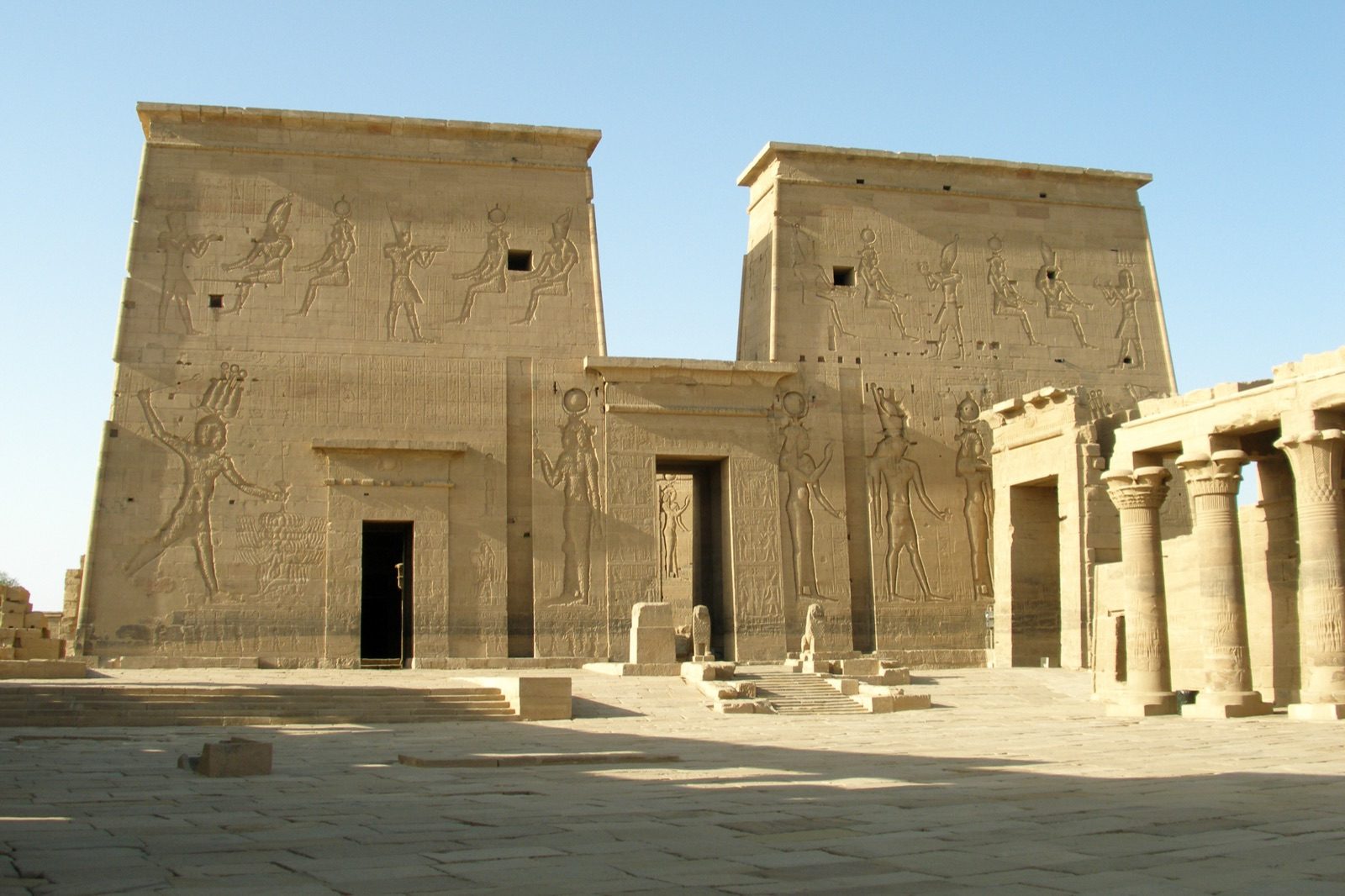
Some Kemetic practitioners describe their tradition as an unbroken continuation of ancient Egyptian religion, tracing descent through secret societies said to have survived from the moment paganism was formally outlawed under the Roman emperor Theodosius I in 392 AD, or from the closing of the last still-functioning Egyptian temple, the Temple of Isis at Philae, shut down by the Byzantine emperor Justinian around 535 AD. Wikipedia's own summary of that claim is blunt about its evidentiary standing: "these claims are historically unprovable." Ancient Egyptian religion itself was never a single fixed system to begin with, a point our own look at Egypt's three rival creator gods covers in more detail, which makes a single unbroken line of transmission an even harder claim to sustain.
What the documented record shows instead looks closer to reinvention than survival: three groups, working from Egyptological scholarship and surviving texts with no continuous priesthood behind them, arrived at three different versions of the religion within the same fifteen-year window, without reference to each other's work. Independent reconstruction from written sources is the pattern the historical evidence actually supports, not practice transmitted unbroken from generation to generation.

The Nisut stepped down in 2023, on a schedule borrowed from the pharaohs
Kemetic Orthodoxy's monarchical structure produced an event none of the other Kemetic groups has an equivalent to. Siuda was ordained a Hemet-Nisut, or "priest of the king," on September 3, 1993, and was formally coronated as Nisut in Egypt on November 6, 1996, at the site where the ancient Heb-Sed festival itself was once held. In a public letter posted on August 1, 2023, titled "Year 31 Letter," she wrote: "As of July 31, 2023, I am no longer acting as the Nisut of Kemetic Orthodoxy." She tied the timing to a specific ancient precedent, not to any internal dispute: pharaohs who reigned thirty years were traditionally entitled to a Heb-Sed, a jubilee ritual meant to test whether a king's rule should be renewed for another thirty. By the House of Netjer's own regnal calendar, counted from her 1993 ordination, she had just completed Year 30, the same milestone that triggered a Heb-Sed in antiquity. Siuda's own letter states she considered that option and turned it down: "I have opted not to renew my kingship at Year 31, I will hold no 30-year Heb-Sed, and that I have returned to civilian status."
In the same letter, Siuda reported that the House of Netjer had grown, over those three decades, into "a perpetually internet-connected global organization with more than 600 active members living in more than 30 different countries," with roughly a thousand people initiated to membership in total over the group's history. Since her departure, governance has passed to the House of Netjer's Temple Board, and no successor Nisut has been publicly announced.