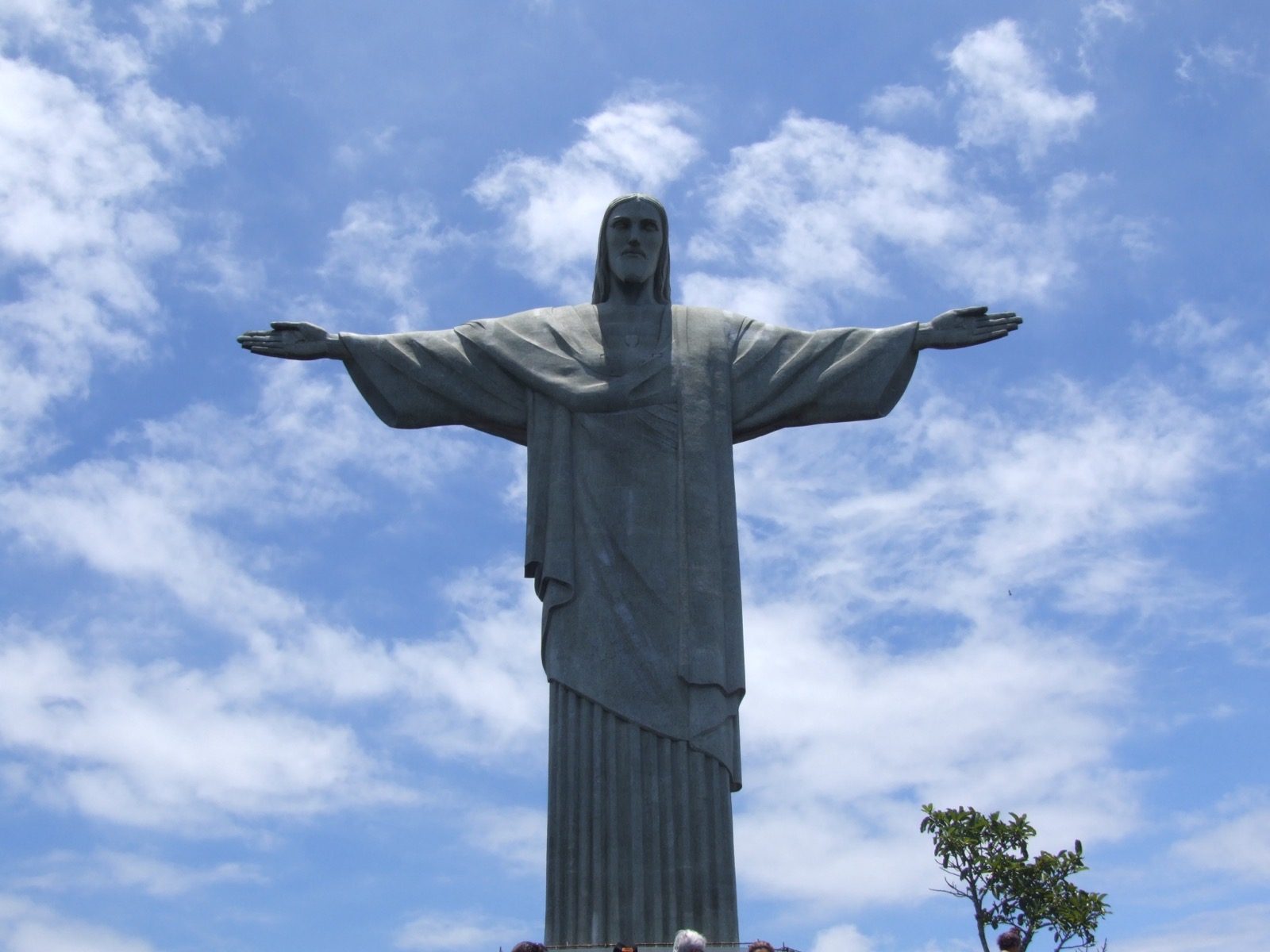

A wonder that UNESCO went out of its way to disown
Search "Christ the Redeemer Seven Wonders" and most results treat the title as close to official, an internationally sanctioned honor roll of humanity's greatest monuments. It isn't. The organization behind the 2007 public vote that produced the "New Seven Wonders" list is the New7Wonders Foundation, a private organization based in Zurich, founded by Swiss-Canadian filmmaker Bernard Weber and run through a commercial entity called the New Open World Corporation that handled the campaign's licensing and sponsorship revenue. The vote was funded by private donations and the sale of broadcast rights, not by any government or international body.
UNESCO did not sit quietly on the sidelines of that campaign. On June 20, 2007, weeks before the results were announced, UNESCO issued a statement putting daylight between itself and the project: "There is no comparison between Mr Weber's mediatised campaign and the scientific and educational work resulting from the inscription of sites on UNESCO's World Heritage List." UNESCO had briefly advised the foundation on nominee selection in the campaign's early years, then formally withdrew, first in 2001 and again in 2007, on the grounds that a popularity contest run off internet votes couldn't apply the expert review and site-management criteria UNESCO's own World Heritage process requires. When the New7Wonders results were announced on July 7, 2007, in Lisbon, with Christ the Redeemer among the seven winners, UNESCO's position hadn't moved an inch.
What UNESCO has actually put its name to is a different designation entirely, granted five years later. In 2012, UNESCO inscribed "Rio de Janeiro: Carioca Landscapes between the Mountain and the Sea" as a World Heritage Site, the first urban cultural landscape ever listed under that category. The citation bundles Corcovado mountain and its statue together with the peaks of Tijuca National Park, the Botanical Garden founded in 1808, and the forested hills ringing Guanabara Bay into one continuous landscape. Christ the Redeemer isn't independently recognized in that listing. It's one component inside a citation about how Rio's mountains, forest, and coastline fit together, which is a considerably narrower honor than the "Wonder of the World" branding suggests.
Built to answer a city's "atheism," not to greet tourists
The idea of putting a Christian monument on Corcovado didn't start as a tourism project or even as a purely religious one. In the mid-1850s, the Vincentian priest Pedro Maria Boss proposed a monument on the mountain to honor Princess Isabel, then regent of Brazil and daughter of Emperor Pedro II. The project went nowhere. In 1889, Brazil became a republic and formally separated church and state, and a monument built to honor the old imperial family had no path forward in the new secular order. The proposal was dismissed.
It resurfaced in 1920 for a specific reason: the Catholic Circle of Rio de Janeiro revived the idea because its organizers were alarmed by what they described as the city's "perceived atheism." This wasn't a civic beautification campaign. It was a religious institution answering what it saw as its own loss of ground. The Circle ran a public fundraising drive called Semana do Monumento, "Monument Week," to collect signatures and donations, and the money that eventually paid for construction came almost entirely from Brazilian Catholics rather than the state. The statue was dedicated on October 12, 1931, more than a decade after that revival and roughly eighty years after Boss's original, unrelated proposal.
None of that history shows up in how the statue gets described today, where it's routinely framed as a neutral, welcoming civic symbol of Rio and Brazil as a whole. Its actual founding motive was narrower and more contested: a private religious campaign responding to a perceived secular drift in one city, financed by that campaign's own supporters rather than by any government. That's a very different foundation story than the ancient world's Seven Wonders, most of which were built as royal monuments rather than answers to a domestic religious dispute.
The design that almost had Christ gripping a globe
The organizers didn't settle on the open-armed pose everyone recognizes today until fairly late in the process. The design competition considered several distinct concepts: a plain Christian cross, a pedestal meant to symbolize the world, and a standing figure of Christ holding a globe in one hand and a cross in the other. That globe-and-cross version was the one project organizers actually accepted first, before the design changed to the arms-outstretched figure that exists on Corcovado now.
The swap matters more than it might sound. A figure gripping a globe reads as dominion, a ruler holding the world in his hand. A figure with open arms reads as an embrace, which is the peace-and-welcome symbolism the statue is now famous for. Visitors photographing it today are looking at a completely different piece of iconography than the one its own organizers signed off on first.
The team that built the final version was also considerably less Brazilian than the statue's role as a national symbol implies. Brazilian engineer Heitor da Silva Costa and artist Carlos Oswald handled the underlying design, but the sculpture itself was executed by French sculptor Paul Landowski, who in 1922 specifically commissioned Romanian sculptor Gheorghe Leonida, then working in Paris, to model the statue's face. French engineer Albert Caquot designed the reinforced-concrete structure that gives the statue its wide, cross-shaped span, a material choice made over steel specifically because it suited that outstretched-arm geometry. The finished statue was then clad in soapstone tile.
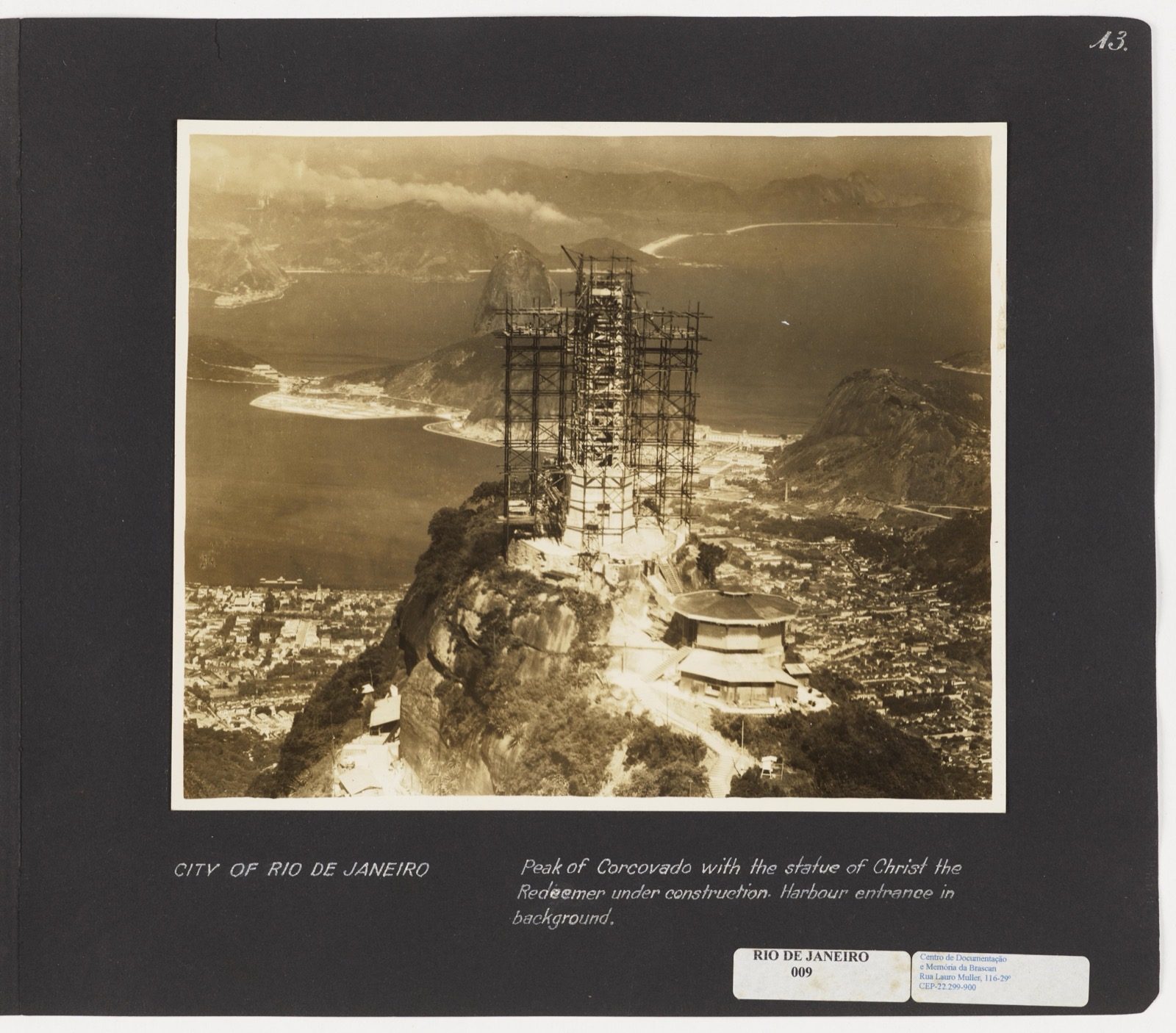
.jpg)
The remote-controlled unveiling that got rained out
The dedication ceremony on October 12, 1931, was supposed to include a genuinely space-age flourish for its era. The plan was for the statue's floodlights to be switched on remotely by shortwave radio, operated by Guglielmo Marconi himself from Rome, 9,200 kilometers (5,700 miles) away, an intercontinental radio spectacle built around the same technology Marconi had spent his career developing. Bad weather in Rome disrupted the signal on the day, and organizers switched the lights on locally instead. The unveiling that's often retold as a marvel of long-distance radio engineering was, in practice, someone flipping a switch on the mountain because the remote version didn't work.
The statue's history since 1931 has kept adding this same kind of gap between the polished story and the messier reality. It has been struck by lightning repeatedly, including well-documented strikes in 2008 and 2014 that damaged fingers on its hands and required renovation. A small chapel was consecrated inside its pedestal in October 2006 to mark the statue's 75th anniversary, turning a monument built as a political statement against secularism into an active place of Catholic worship. Christ the Redeemer at least has an unusually well-documented paper trail behind it; other wonders have no such certainty about whether their popular origin stories are even true. But between the "UNESCO Wonder" label it doesn't really hold, the open-armed pose it wasn't originally designed with, and a debut ceremony that didn't go as planned, Christ the Redeemer's actual history is a lot less tidy than the postcard version.