
One search term, four different generations
Parade's rundown of Greek god and goddess names runs to two hundred entries, alphabetized straight through from Aphrodite to Zeus. Dedicated mythology sites like greekgodsandgoddesses.net and listlovers.org cover the same ground in shorter form, using the same method: one long column sorted by letter, no distinction between who belongs to which stretch of the pantheon's history. That's the format almost every "Greek goddesses" page settles into, and it treats every name on the list as interchangeable, regardless of when or how each goddess actually entered Greek mythology.
Hesiod's Theogony, the source most of these later lists trace back to whether they know it or not, does not treat "goddess" as one tier. It sorts female deities by which generation of gods they belong to. Titanesses come first: Gaia's own daughters by Uranus, a second generation that includes Themis, Rhea, Mnemosyne, Phoebe, Tethys, and Theia. Olympian goddesses come after Zeus's generation wins the Titanomachy, the ten-year war that put him in charge: Hera, Demeter, Athena, Artemis, Aphrodite, and Hestia. A third group does not sit neatly in either tier. Hecate is technically part of the defeated generation by blood, yet the poem treats her like nobody else in it.
That structure was not a minor bookkeeping detail to the Greeks, because the war that produced it was not symbolic. The Titanomachy left most of its losers exactly that: losers. The male Titans who fought went down to Tartarus, and the Titan-generation goddesses who survived did so on terms Zeus's regime set, not terms they kept for themselves. Two of them broke that pattern in opposite, well-documented directions, and neither shows up in a typical goddess listicle's opening paragraph.
The one deity a defeated dynasty didn't cost anything
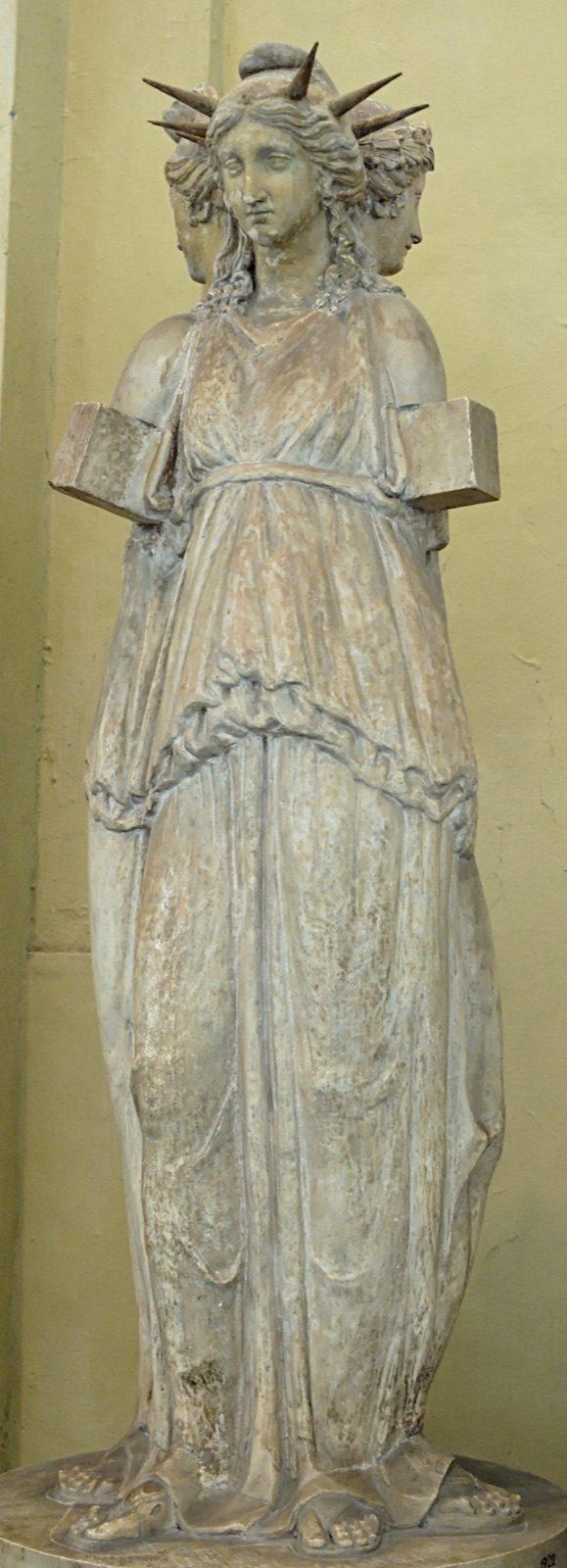
Hecate's family tree runs entirely through the losing side of that war. Hesiod names her parents as Perses and Asteria, both children of Titans: Perses is a son of the Titan Crius, Asteria a daughter of the Titans Coeus and Phoebe. By lineage alone, she belongs to exactly the generation Zeus's forces had just finished fighting.
Yet the Theogony does something for her that it does for no other deity of her rank. It hands her roughly forty consecutive lines, conventionally numbered 411 to 452, that read less like a genealogical entry and more like a hymn: "The son of Cronos did her no wrong nor took anything away of all that was her portion among the former Titan gods: but she holds, as the division was at the first from the beginning, privilege both in earth, and in heaven, and in sea." Zeus gave her a share of earth, sea, and starry heaven on top of what she already had, and Hesiod adds that she "is honoured exceedingly by the deathless gods," a scope of authority most Olympians never get credited with in the poem, let alone a Titan's granddaughter.
An interruption classicists spent decades arguing wasn't real
Outside the poem's genealogical structure, the Hecate passage functions almost as an aside, dropped into the middle of an otherwise compressed list of names, and generations of classicists noticed exactly what modern readers notice: it does not fit the pattern around it. Early 20th-century editors including Georg Friedrich Schoemann, Hans Flach, Felix Jacoby, and Friedrich Schwenn concluded the hymn was a later interpolation, added by someone other than Hesiod, with Schwenn willing to accept only nine of the roughly forty lines as genuine. That reading held for much of the century.
More recent stylistic and linguistic analysis, notably classicist Jenny Strauss Clay's study of the passage, pushed back against that consensus, finding the vocabulary and structure consistent with the rest of the poem rather than a later graft. The passage still stands in every modern edition, disputed pedigree and all. Nobody has produced a fully satisfying account of why Hesiod, if it is Hesiod, singled out one Titan-line goddess for this much space and this much generosity while the rest of her generation lost ground.
Zeus's second wife ran two entire families of goddesses
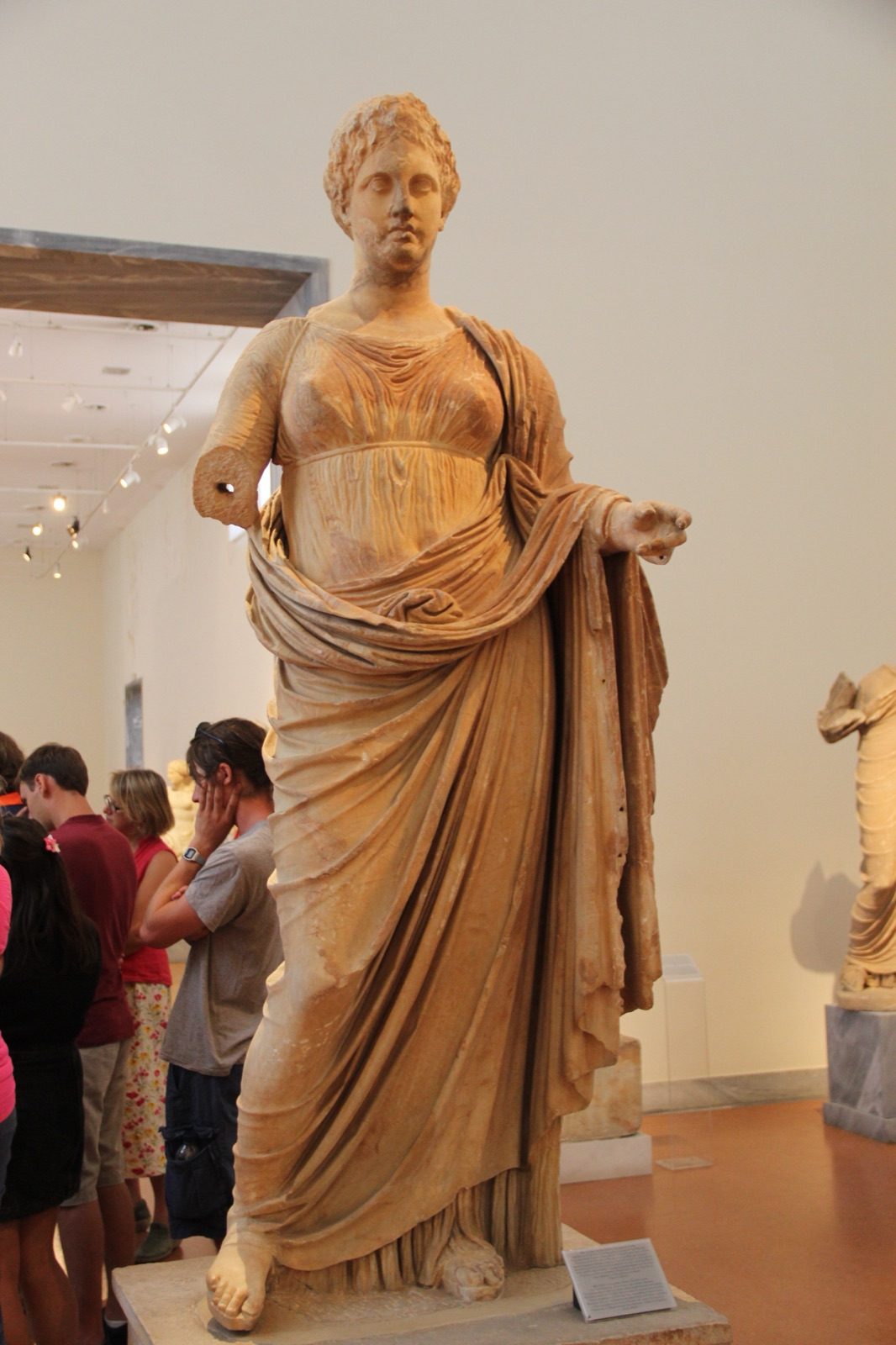
Before Hera, before the long list of affairs the mythology is best known for, Zeus's first wife was Metis, the Oceanid he swallowed while she was pregnant with Athena. His second marriage gets far less attention, even though it produced two full sets of goddesses that keep showing up elsewhere in Greek myth. Hesiod is direct about it: "Next he married bright Themis who bare the Horae (Hours), and Eunomia (Order), Dike (Justice), and blooming Eirene (Peace), who mind the works of mortal men, and the Moerae (Fates) to whom wise Zeus gave the greatest honour, Clotho, and Lachesis, and Atropos who give mortal men evil and good to have."
That is six goddesses from one marriage: the three Horae, who preside over natural and social order, and the three Moirai, the Fates, whom Hesiod says Zeus honored above anyone else, an unusual thing for a poem about the king of the gods to concede, that another power outranks his own say over mortal life and death.
Themis carried an older kind of authority into that marriage, too. Before Zeus, ancient sources record her holding the oracle at Delphi, passed down from Gaia and later lost to Apollo in the hostile takeover that our own article on Apollo covers in full. That story belongs there rather than repeated here, but it's worth knowing that the goddess who lost Delphi is the same one who, married into Zeus's household afterward, ended up mother of the Fates that even Zeus deferred to.
.jpg)
Aphrodite has two birth stories that don't agree with each other
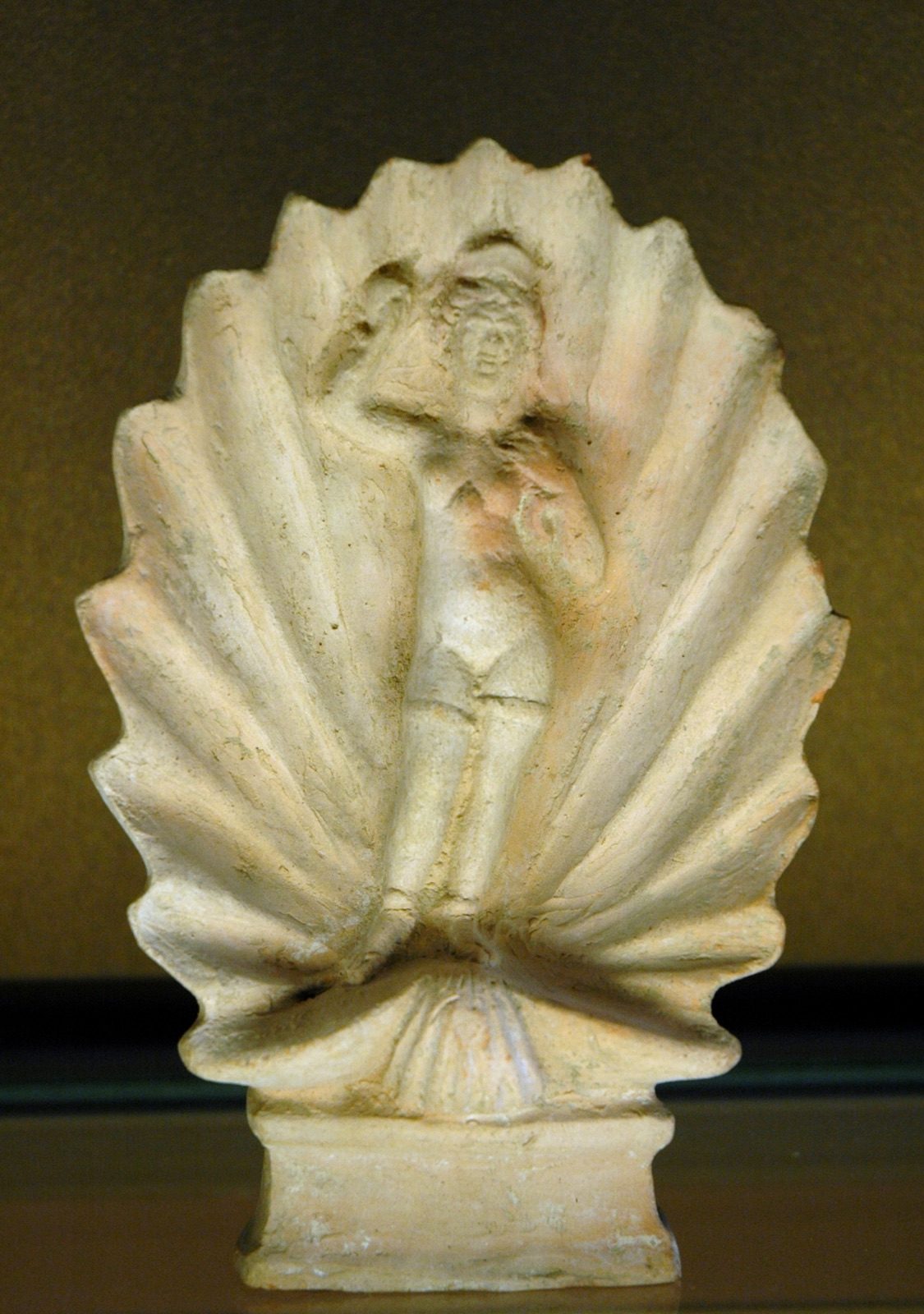
Hesiod's Theogony gives Aphrodite the strangest origin of any Olympian goddess. Cronus castrates his father Uranus and throws the severed flesh into the sea; foam gathers around it, and Aphrodite rises from the foam already an adult, drifting first to Cythera and then to Cyprus. That places her birth before Zeus's own generation exists at all. By Hesiod's own timeline, she is technically older than the Olympian family that later counts her as one of its own.
Homer's Iliad gives a completely different, far more ordinary account: Aphrodite as daughter of Zeus and a goddess named Dione, born the same unremarkable way most Olympians are. The one scene Dione actually appears in is Book 5 of the Iliad, when the Greek hero Diomedes wounds Aphrodite on the battlefield and she flees home to Olympus in tears. It's Dione, not Hera or any of the more familiar Olympian goddesses, who comforts her there. After that single scene, Dione all but disappears from the rest of surviving Greek myth.
Her name is not incidental. Dione is grammatically the feminine equivalent of Zeus's own name, both descended from the same root, *Dyeus, that also produces the Roman Jupiter. A goddess whose name spells out something close to "she who belongs to Zeus," surviving in exactly one scene of one poem before vanishing from the record entirely, is the kind of loose end that points toward an earlier layer of religion the later, more organized mythology mostly wrote over.

The six names every list already gets right
The familiar six anchoring virtually every modern "Greek goddesses" list are real and well documented: Hera, Demeter, Athena, Artemis, Aphrodite, and Hestia, the same names covered alongside the contested twelfth Olympian seat in our look at the Twelve Olympians. What the alphabetized version leaves out is everything above it: two Titan-line goddesses whose standing broke in opposite directions once Zeus's generation took over, and the second wife whose household produced six more goddesses most readers never connect back to her. Below the six sits a much larger cast of minor goddesses, among them Iris, the messenger goddess the Odyssey never mentions, and Aletheia, the goddess of truth, whom a Roman fable left without feet.